
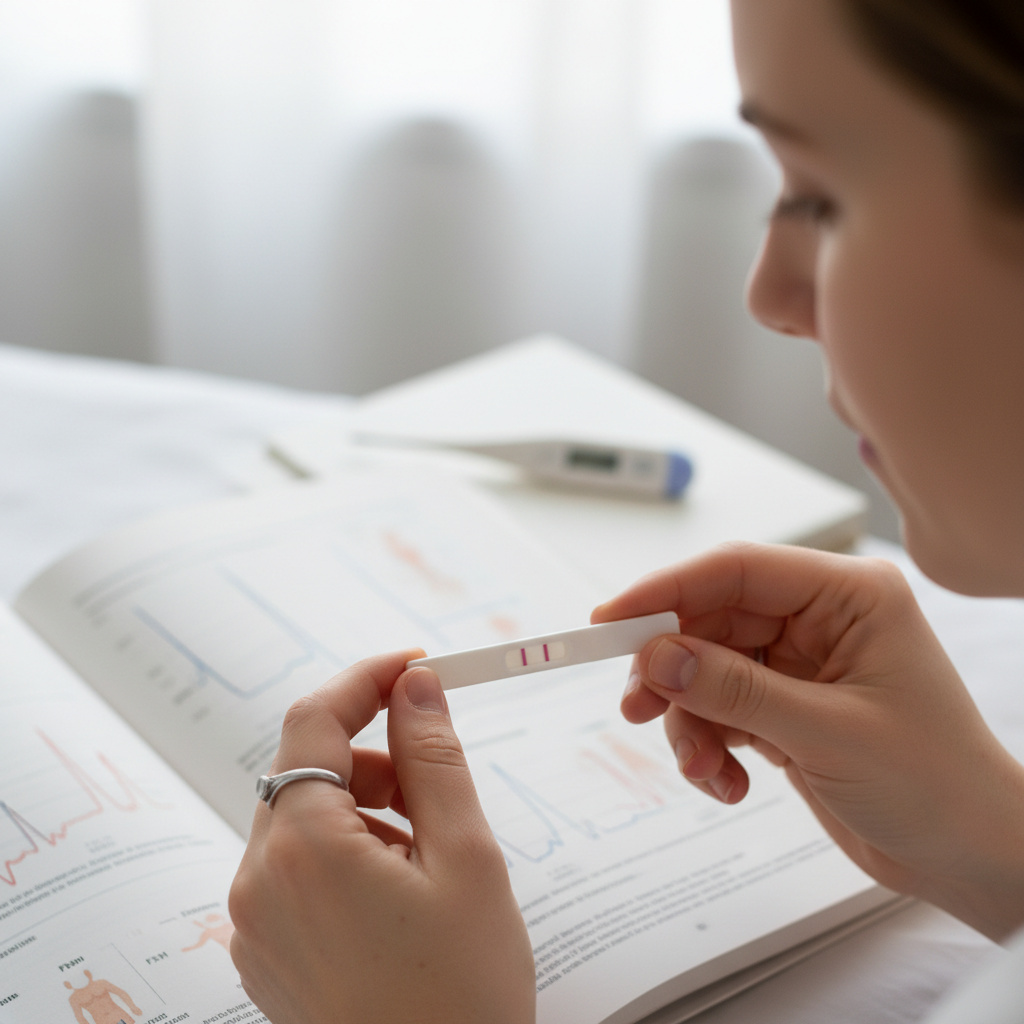
Most people who search for their fertile window are really asking something quieter underneath. Did I time this right. Did I wait too long. Did I just lose a whole month. If that is the question that brought you here, take a breath. You almost certainly have more room than the panic is telling you, and there is a way to actually know instead of guess.
What the fertile window actually is
Your fertile window is the stretch of days in your cycle when sex can lead to pregnancy. It is wider than one perfect day, and that matters for you.
An egg lives for about 12 to 24 hours after it is released. Sperm, though, can survive in the reproductive tract for up to five days. So the window opens a few days before ovulation and closes about a day after. In practice that is roughly six fertile days, with the highest odds in the one to two days before ovulation, according to research from the National Institute of Child Health and Human Development.
This is the part that quietly relieves people. You do not have to hit a single bullseye. Sex in the days leading up to ovulation is what does most of the work, because the sperm is already there waiting when the egg arrives.
When does ovulation happen, really
The common teaching is day 14 of a 28 day cycle. It is a useful average and a poor promise.
Real cycles move. The American College of Obstetricians and Gynecologists notes the fertile window often falls somewhere between days 8 and 19 in cycles lasting 26 to 32 days. If your cycles are longer, shorter, or simply unpredictable, that range shifts with you, and calendar math gets less reliable the more your cycle varies.
So if an app told you that you ovulated on Tuesday, hold that loosely. An app predicts from your past cycles. It does not see what your ovaries are doing this month.
Did I miss my fertile window this cycle?
Here is the honest answer. Maybe, for this specific cycle. But one cycle is not your chance, it is one of many, and the door stays open.
A few things worth knowing if you think you missed it:
You may not have ovulated when you assumed. Predicted ovulation and actual ovulation are often days apart, which means the window you thought closed may not have opened yet.
If you had sex anytime in the five or so days before you ovulated, sperm may well have been present for it. People count backward from ovulation day and forget how long sperm survives.
And if this cycle truly passed, the next one is coming. Trying to conceive is rarely about one heroic month. It is a series of cycles, and timing improves once you actually know your pattern.
If you are now in the stretch between possible conception and a test, our guide to pregnancy symptoms before a positive test can help you read your body without spiraling.
How to actually know where you are
Tracking has gotten much better than the old calendar and a bedside thermometer. There are three tiers, and they answer different questions.
Wearable temperature rings
This is the easiest upgrade for most people, and it is genuinely accurate. Fertility tracking rings like Oura read your skin temperature continuously through the night, every night, while you sleep. After you ovulate, progesterone causes a small rise in body temperature, and these rings catch the shift that marks the day ovulation happened.
Yes, this is after the fact. You learn the day you ovulated once it has passed, not before. But it is precise, and over a couple of cycles it shows you your real pattern so you can plan ahead. In one validation study, Oura detected about 96 percent of ovulations with an average error of just over one day, well ahead of the calendar method.
Here is the part worth knowing. A ring measuring you all night long is generally more accurate than taking your temperature once at the bedside with a thermometer. A single morning reading is easily thrown off by a restless night, an early alarm, or a glass of wine. A ring reads hundreds of data points while you sleep, so the signal is cleaner. Oura is the best known, and similar temperature sensing wearables work on the same principle.
Ovulation tests, and the newer hormone monitors
The classic ovulation predictor kit detects your surge in luteinizing hormone, the hormone that rises a day or so before you ovulate. That is a predict signal. It tells you ovulation is likely coming, so you know your window is open now.
The newer generation goes further. The Mira monitor reads actual hormone levels and gives you a number rather than a line to squint at, tracking luteinizing hormone and other hormones across your cycle. Proov added something different, an at home test for PdG, a urine marker of progesterone that only rises after you ovulate. An LH surge predicts ovulation, but PdG is what confirms it actually happened, which is a real distinction, because you can surge without releasing an egg. Kegg is another option in this space, reading changes in cervical fluid to flag the fertile window as it opens.
Together these can both predict your window and confirm ovulation afterward, which is more than a basic strip can do alone.
Follicular monitoring ultrasound, the one that shows you in real time
Everything above is an estimate or an after the fact confirmation. Ultrasound is the only method that lets us watch it happen.
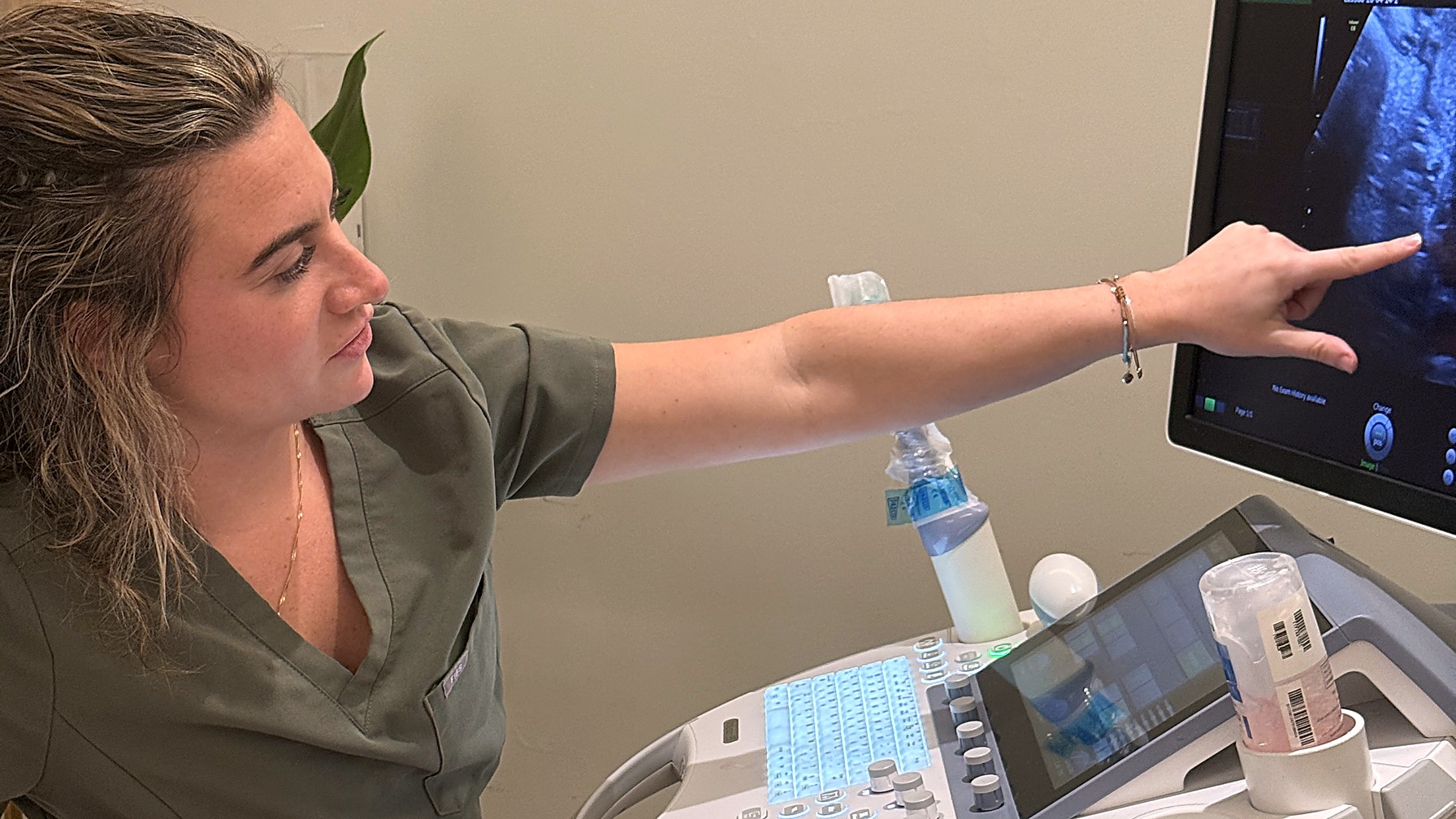
There is a common myth that follicular monitoring is only for people doing IVF. It is not. It is simply a series of short ultrasounds that track a follicle as it grows, so we can see where you are in your cycle right now and tell you when ovulation is likely, before it happens. You do not need to be in a fertility treatment cycle to use it. You just need to want a clear answer.
This is the difference between a forecast and a look out the window. For women with irregular or hard to read cycles, where rings and strips struggle most, seeing it directly is often the moment the timing finally makes sense.
If you want a fuller picture of confirming that ovulation truly happened, not just that it was predicted, our piece on the complete hormonal workup beyond a 21 day progesterone walks through what the standard single test misses.
Ready to stop guessing your window? Same week appointments available.
Free Preconception Guide
Thinking about getting pregnant? Our free Preconception Guide walks you and your partner through the 90 day window, what to track, and how to prepare your body, all in plain language.
What this means at Materna
When you come to us unsure whether you missed your window, we do not hand you an app screenshot and a shrug. We can actually look.
Follicular monitoring in NYC is a series of quick ultrasounds that watch a follicle grow and show us, in real time, where you are in your cycle and when ovulation is likely. Instead of predicting from last month, we see this month. For women with irregular or hard to read cycles, this is often the first time the timing finally makes sense.
From there we can build around what we actually find, including hormone work where it helps. Many people are surprised how much a standard fertility checkup leaves out, which is why we wrote about why your fertility workup is probably incomplete. And if children are part of your plan but not yet, it is worth understanding the real egg freezing success rates by age before the calendar makes the choice for you. The point is simple. You leave with answers about your own body, not a generic calendar.
Fertile window questions, answered
How many days is the fertile window?
About six days. The five days before ovulation, plus ovulation day. The highest chance of conception is in the one to two days just before you ovulate.
Can I still get pregnant after ovulation?
The chance drops quickly once the egg is gone, usually within about 24 hours of ovulation. If you had sex in the days before, though, sperm may have already been waiting, so do not rule the cycle out.
Why do my app and my ovulation test disagree?
Your app predicts from past cycles. A test reads this cycle's hormones. When they conflict, this cycle's signal is the better one, and an ultrasound is better still.
I have irregular cycles. How do I find my window?
Calendar math works poorly for you, so lean on real time signals. Cervical mucus and ovulation tests help, and follicular monitoring removes the guesswork by showing where you actually are.
Does timing sex perfectly matter that much?
Less than people fear. Regular sex across the fertile window does most of the work, which takes the pressure off any single day.
The takeaway
Your fertile window is roughly six days, ovulation rarely lands exactly when the average says, and one cycle is never your only chance. If the not knowing is the hardest part, that is the part we can fix. We can show you where you are in your cycle this month and help you plan the next one with real information.
You came for answers about your window. Let us help you get them. Same week appointments available.
Not ready to book yet? Start with our free guide.
Get the free guideWe're here for you - from the start
We’re redefining maternal health by replacing the ER with a welcoming, evidence-based care environment that centers you: your body, your symptoms, your experience.
Schedule a visit
Compassionate support for every stage of pregnancy
Contact
Connect with our dedicated support team
Phone
Direct line for immediate healthcare guidance
Office
Women's health center in
130 7th Ave S NY, NY 10014
130 7th Ave S NY, NY 10014
Related blogs and articles

PCOS Is Now PMOS: What It Means for Getting Pregnant
PCOS is now PMOS, polyendocrine metabolic ovarian syndrome. What the name change means, and a realistic roadmap for getting pregnant with PMOS.

Chemical Pregnancy: What It Means and What Happens Next
Chemical pregnancy explained with care: what it is, why it happens, what recovery looks like, and when to be seen. Same-week appointments available.
Cryptic Pregnancy: Signs, Causes, and How to Know for Sure
A cryptic pregnancy is real but rare. An NYC OB/GYN team explains how tests miss it, who is at risk, and how to get a definitive answer this week.