
Medically reviewed by the Materna Health Medical Team
A cryptic pregnancy is a pregnancy that goes unrecognized for months, sometimes until labor. It sounds impossible, and the internet treats it as either a myth or a horror story. The truth sits in between: it is real, it is rare, and there is a reliable way to find out where you stand. Here is what the evidence says, and how we settle the question at Materna.
What a Cryptic Pregnancy Actually Is
Clinicians usually define a cryptic or denied pregnancy as one that goes unrecognized until 20 weeks or later. The best data comes from a one year population study in Berlin, which found that about 1 in 475 pregnancies reached that point without the woman knowing. Roughly 1 in 2,455 went undetected until labor itself.
Those numbers make cryptic pregnancy uncommon, but not vanishingly so. A busy city hospital sees several cases a year.
Most women searching this term are in a different spot: weeks of symptoms, negative tests, and a growing sense that something is off. That earlier version of the question is much easier to answer, and answering it early is the whole point.
How Pregnancy Tests Can Miss a Pregnancy
Home tests measure hCG, the hormone a pregnancy releases after implantation. Implantation happens 6 to 12 days after ovulation, per the landmark Wilcox study in the New England Journal of Medicine. No test can turn positive before then.
The most common reason for a false negative is timing. If you ovulated later than you think, which is routine with irregular cycles or polycystic ovary syndrome (PCOS), a test taken at your "missed period" may simply be too early. Urine tests become reliable around 12 to 14 days past ovulation, and about 1 in 10 pregnancies still reads negative on the day of the missed period.
Other causes are less common but real. Very dilute urine can drop hCG below the test threshold. In rare cases of very high hCG, the test itself can be overwhelmed and read negative, a lab quirk called the hook effect. And a small number of pregnancies produce unusually low hCG throughout.
Our guide to how early a pregnancy test can really turn positive covers the timing math in detail.
Tests keep saying no, but your body keeps saying maybe? A blood test and an ultrasound settle it in one visit. Book a same-day Pregnancy Visit and Ultrasound at Materna. Same-week appointments available.
Why You Might Still Seem to Get a Period
Continuing "periods" are the most confusing part of cryptic pregnancy stories. True cyclic menstruation stops in pregnancy. The lining that would shed each month is exactly what the pregnancy has implanted into.
But bleeding in pregnancy is common, and it can arrive close to when a period was expected. Implantation bleeding, cervical changes, and early pregnancy bleeding can all look period-like, especially for someone whose cycles were never predictable.
Cycle context hides pregnancies too. Perimenopause, breastfeeding, recent hormonal birth control, and significant weight changes all disrupt the monthly signal women rely on to notice that something changed. Symptoms are not a dependable backup either. Some pregnancies cause almost none, and fatigue, nausea, or bloating are easy to blame on stress, food, or a virus.
Our overview of early pregnancy signs before a positive test walks through what those signals can and cannot tell you.
How to Get a Definitive Answer
Two tools resolve this question with near certainty, and both fit in one visit.
A blood hCG test measures the actual hormone level rather than a yes or no threshold. Laboratory assays detect hCG at concentrations of 1 to 2 mIU/mL, far below what home tests need, which makes a truly negative blood test strong evidence you are not pregnant (NIH StatPearls).
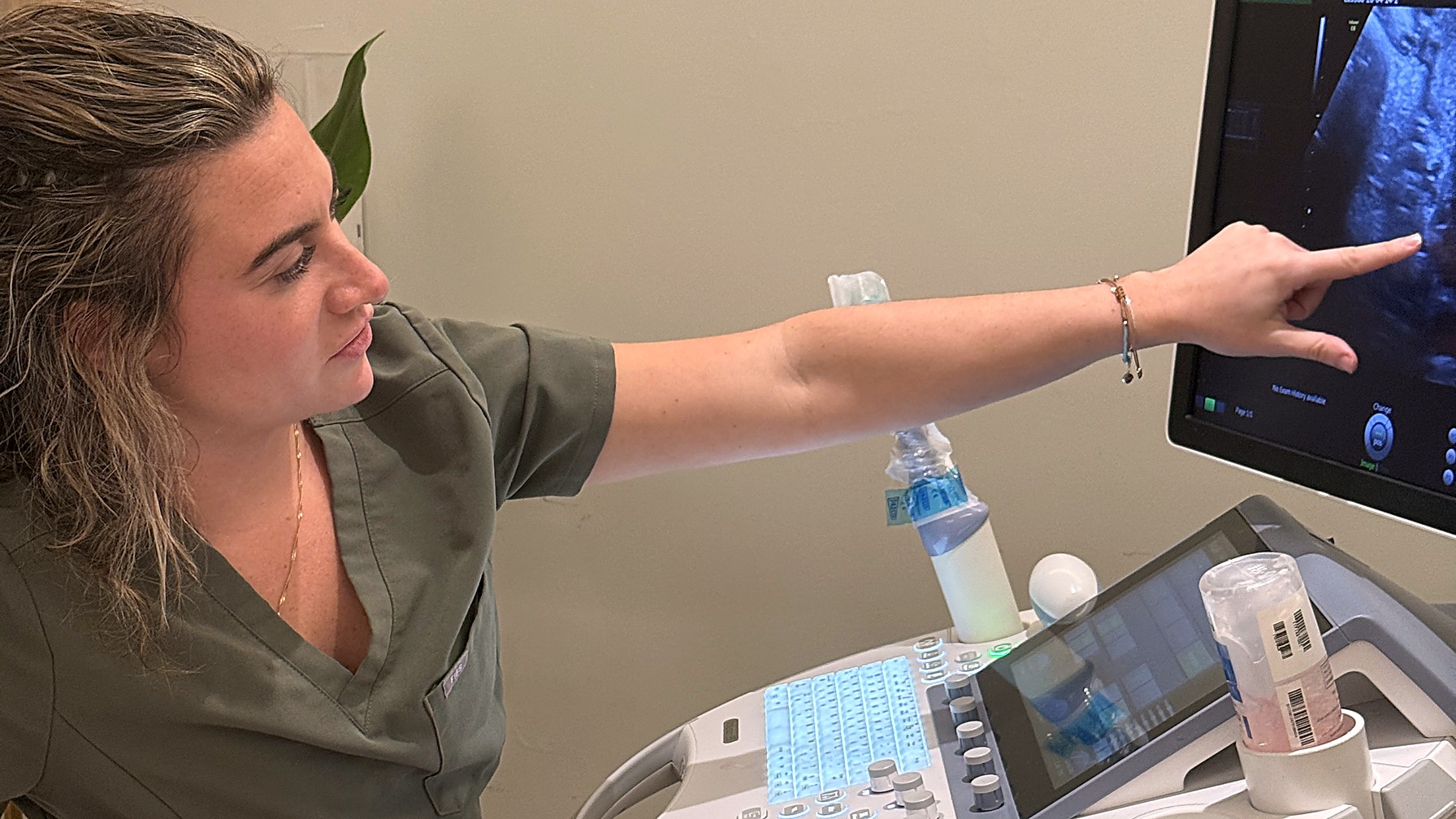
Ultrasound answers the question directly for any pregnancy past the earliest weeks. A gestational sac is usually visible by about 5 weeks, and beyond the first trimester a pregnancy is unmistakable on a scan. Blood work plus ultrasound together leave essentially nowhere for a pregnancy to hide.
Two situations should move quickly: one-sided pelvic pain with a late period, which needs same-day evaluation to rule out an ectopic pregnancy, and bleeding heavier than a normal period. Beyond that, if symptoms have lasted more than two cycles with negative tests, get evaluated either way. Persistent nausea, fatigue, or missed periods have other treatable causes, from thyroid dysfunction to PCOS, and they deserve a workup of their own.
What This Means at Materna
When you come to us wondering whether you could be pregnant, we do not hand you another box of test strips. We draw a quantitative hCG, perform an ultrasound in-house when it can show something meaningful, and review the results with you in the same visit.
If you are pregnant, you leave knowing how far along you are, whether the pregnancy is in the uterus, and what comes next, all through same-day early pregnancy care in NYC at our West Village office. If you are not, we help you figure out what is actually driving your symptoms rather than sending you home with a shrug.
Cryptic Pregnancy FAQs
Can you have a cryptic pregnancy and still get your period?
Not a true period. Menstruation stops in pregnancy, but pregnancy bleeding can arrive near the expected time and look convincing, which is how many cryptic pregnancies stay hidden. Any bleeding pattern that differs from your normal cycle is worth checking.
How common is a cryptic pregnancy?
About 1 in 475 pregnancies goes unrecognized past 20 weeks, and about 1 in 2,455 until labor, based on a prospective population study of nearly 30,000 deliveries. Rare, but real.
Can a blood test miss a cryptic pregnancy?
It is very unlikely. Serum tests detect hCG at levels far below home test thresholds, and they report a number rather than a faint line. Paired with an ultrasound, a negative result is about as definitive as medicine gets.
Who is most at risk of a cryptic pregnancy?
Women with irregular cycles or PCOS, women in perimenopause, those recently off hormonal birth control or currently breastfeeding, and anyone whose pregnancy causes few symptoms. First pregnancies can also hide longer because the early signs are unfamiliar.
How long can a cryptic pregnancy go undetected?
Until the pregnancy makes itself known. In the Berlin data, a small number of women learned they were pregnant in labor. That outcome is the rarest form, and it is exactly what a single blood test and scan prevent.
The Bottom Line
Cryptic pregnancies are rare, but the uncertainty behind the search is common, and it does not have to last weeks. One visit, one blood draw, and one scan replace guessing with an answer.
If your body and your tests are telling you two different stories, book a Pregnancy Visit and Ultrasound at Materna in the West Village and know for sure. Not ready to book? Download our free first-trimester guide for calm, evidence-based guidance on the earliest weeks.
Not ready to book yet? Start with our free guide.
Get the free guideWe're here for you - from the start
We’re redefining maternal health by replacing the ER with a welcoming, evidence-based care environment that centers you: your body, your symptoms, your experience.
Schedule a visit
Compassionate support for every stage of pregnancy
Contact
Connect with our dedicated support team
Phone
Direct line for immediate healthcare guidance
Office
Women's health center in
130 7th Ave S NY, NY 10014
130 7th Ave S NY, NY 10014
Related blogs and articles

Genetic Testing for Women: Which Tests and When
Genetic testing for women by life stage: carrier screening, prenatal screening, and hereditary cancer testing, explained by an NYC women's health team.

BRCA Testing Before Pregnancy: What to Know
BRCA testing before pregnancy gives you more choices. An NYC women's health team explains who it fits and how it works. Visits available this week.

When Does Morning Sickness Start and End? Week by Week
When does morning sickness start? Usually weeks 4 to 6, peaking near week 9 and easing by weeks 14 to 22. Same-day nausea care in NYC. Book a visit.