
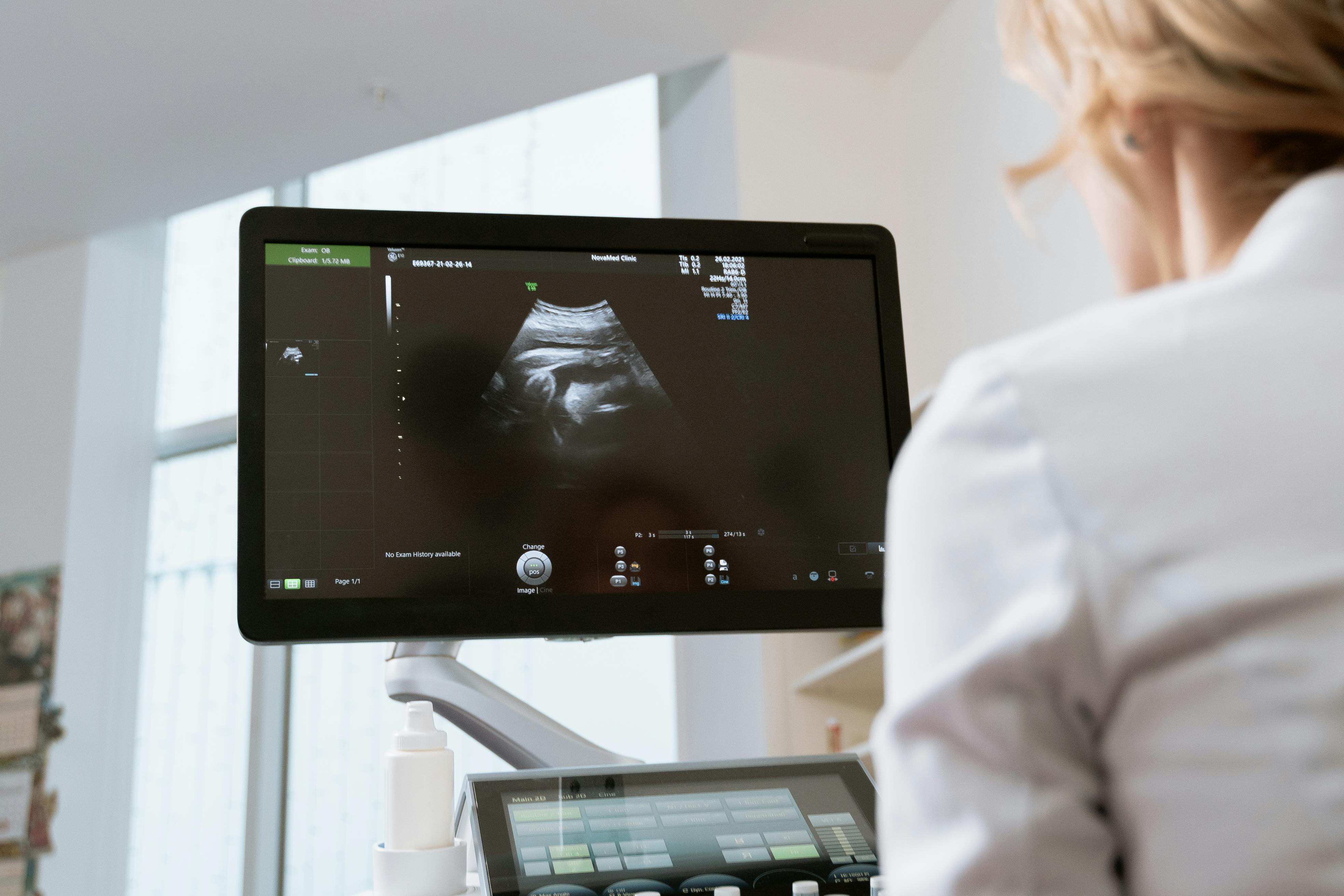
Fertility Monitoring · Patient Guide · NYC · Materna Healthcare
What Is Follicular Monitoring? A Complete Guide helping Patients Visiting New York City with IVF and IUI
Same-day follicle ultrasound and lab results by 2 PM, for patients whose fertility clinic is anywhere in the world and who need outside monitoring, remote IVF monitoring, or satellite monitoring while in New York City.
By the Materna Healthcare Clinical Team · 10 min read · Manhattan, NYC
If you're undergoing IVF, IUI, or egg freezing with a fertility clinic outside New York City, and you find yourself in NYC during your stimulation cycle, your monitoring appointments cannot wait. Materna Healthcare is Manhattan's dedicated same-day fertility monitoring partner. We are the local eyes and ears for your home clinic.
The Basics: What Are Follicles?
Your ovaries contain thousands of tiny fluid-filled sacs called follicles. Each follicle holds a developing egg. During a natural cycle, one follicle grows, reaches maturity, and releases a single egg at ovulation.
During a stimulated fertility cycle for IVF, IUI, or egg freezing , your doctor prescribes hormone injections (gonadotropins) to encourage multiple follicles to grow simultaneously. The goal is to develop several mature eggs in one cycle, giving your fertility team more options to work with.
To do this safely and effectively, your doctor needs to track exactly what's happening inside your ovaries in real time. That is what follicular monitoring is for.
What Is Follicular Monitoring?
Follicular monitoring, also called cycle monitoring or stimulation monitoring, is a series of appointments scheduled every one to three days during your stimulation cycle. At each visit, your care team measures two things:
- Follicle size and count: using a transvaginal ultrasound to visualize your ovaries and measure how many follicles are growing and how large each one is
- Hormone levels: through a blood draw measuring estradiol (E2), LH, and progesterone to confirm how your body is responding to the medications
Together, these results give your fertility doctor a precise picture of your cycle's progress, and allow them to adjust your medication dosage in real time, day by day.
Why Does Follicular Monitoring Matter So Much?
At every monitoring appointment your doctor is watching for:
- Are enough follicles responding? If fewer than expected are growing, your medication dose may need to be increased.
- Is growth happening too quickly? Rapidly rising estradiol or accelerated follicle growth can signal a risk of ovarian hyperstimulation syndrome (OHSS), requiring immediate protocol adjustment.
- Are follicles reaching the right size? A mature follicle is typically 17 to 20mm. Too small means the egg may not be ready; too large means the window may have passed.
- Is there a premature LH surge? A premature surge can trigger early ovulation, something your team needs to catch and respond to immediately.
- When is the ideal trigger shot timing? The trigger shot must be given within a very precise window. Same-day results are what make accurate timing possible.
Key hormone levels tracked at every visit:
- Estradiol (E2): Produced by developing follicles. Rising levels confirm growth and help gauge maturity and OHSS risk.
- LH (Luteinizing Hormone): Triggers ovulation. Monitoring catches premature surges before they derail your cycle.
- Progesterone (P4): Confirms ovulation has not occurred prematurely and the endometrial lining is developing appropriately.
Outside Monitoring, Remote IVF Monitoring & Satellite Monitoring Explained
If your fertility clinic is not in New York City, you may have heard your nurse use terms like "outside monitoring," "remote monitoring," or "satellite monitoring." These all refer to the same thing: having your monitoring appointments performed at a local facility near where you are, rather than traveling back to your home clinic for every visit.
Fertility cycles are 10 to 14 days long and require appointments every 1 to 3 days. If you are in New York for work, visiting family, relocating temporarily, or simply live here while your clinic is elsewhere, you cannot fly home for each visit. You need a trusted local partner who can perform your monitoring and report directly to your team.
Materna Healthcare is that partner in New York City. We operate a formal Outside Monitoring Program, acting as the local eyes and ears for your fertility clinic, wherever they are based.
⏱ SAME-DAY RESULTS: GUARANTEED BY 2:00 PM EST
We guarantee same-day lab and ultrasound results transmitted to your home clinic by 2:00 PM EST, ensuring no delays in your cycle instructions. Most out-of-town clinics need your results by early afternoon to advise you on that evening's medication dose. We are built around that deadline.
Who Uses Outside Monitoring at Materna?
Patients come to us for outside monitoring, remote IVF monitoring, and satellite monitoring from fertility clinics based in:
- Miami, FL
- Los Angeles, CA
- San Francisco, CA
- Boston, MA
- Houston and Dallas, TX
- Chicago, IL
- Washington, D.C.
- International fertility clinics: we coordinate across time zones
We also regularly support patients undergoing remote monitoring for egg freezing in NYC, international patients visiting New York during their stimulation cycle, and patients whose clinic refers them to us directly as a standing monitoring partner.
What Materna Provides to Your Clinic
When you visit Materna for an outside monitoring appointment, here is exactly what your home fertility clinic receives, the same day, by 2:00 PM EST:
Transvaginal UltrasoundFollicle counts and individual measurements for both ovaries, plus endometrial lining thickness, delivered in your clinic's preferred report format.
Stat Hormone Labs: E2, LH, P4Estradiol (E2), Progesterone (P4), and LH drawn and processed in our on-premises lab. No external lab. No delays.
Seamless Results ReportingSecure fax, EMR portal upload, or direct email, whichever format your clinic's nursing team prefers.
Dedicated Clinical CoordinationA single point of contact at Materna for your nurses: responsive, professional, and familiar with fertility protocol standards.
What to Expect at a Morning Monitoring Appointment
In New York City, fertility monitoring appointments are typically called "morning monitoring". They take place between 7:00 AM and 9:00 AM so that results can be processed and transmitted to your clinic well before their afternoon protocol review. At Materna, this is exactly how we operate.
Step 1: Arrive Early MorningMorning monitoring runs from 7:00 AM. Arriving early ensures your labs are processed and results reach your clinic in time for their afternoon review.
Step 2: On-Site Blood DrawA small blood sample is taken for your hormone panel (estradiol, LH, and progesterone), drawn and processed in our in-house lab. No external lab. No delays.
Step 3: Transvaginal UltrasoundAn experienced sonographer measures all follicles in both ovaries and assesses your uterine lining. The ultrasound takes approximately 10 to 15 minutes.
Step 4: Results to Your Clinic by 2 PMYour complete report, labs and imaging, is transmitted directly to your home fertility clinic by 2:00 PM EST. Your doctor contacts you with any medication instructions.
The entire visit is typically 20 to 30 minutes. You can go directly to work or about your day immediately afterward.
How Many Monitoring Appointments Will I Need?
Most IVF stimulation cycles involve 4 to 7 monitoring appointments over 8 to 14 days. The exact number depends on how your follicles respond to the stimulation medications.
Typical IVF monitoring timeline:
- Day 2 to 3: Baseline ultrasound and labs before starting stimulation medications
- Day 5 to 7: First stimulation monitoring, checking initial follicle response
- Day 8 to 11: More frequent monitoring as follicles grow, often every 1 to 2 days
- Day 10 to 14: Final monitoring before trigger shot, confirming follicle maturity
Tips for Your Monitoring Visits
- Book morning appointments. NYC fertility monitoring runs 7 to 9 AM so results reach your clinic by afternoon.
- Tell us your clinic's reporting preferences upfront. Let us know whether your clinic prefers fax, email, or a specific EMR portal before your first appointment.
- Bring your medication list. Your Materna clinician will confirm what injections you're currently taking and your most recent dosage.
- Stay hydrated. Good hydration supports blood draw comfort and makes the process faster.
- Don't skip appointments. Every monitoring visit gives your doctor critical real-time data. Consistency is essential.
- Ask questions. Our clinical team is happy to walk you through what they are seeing at each visit.
Free Preconception Guide
Between appointments, protocols, and travel, cycles are a lot to manage. Our free Preconception Guide covers cycle tracking, fertility testing, nutrition, and preparing for pregnancy, all in plain language.
Conveniently Located in Manhattan, NYC
When you're searching for same-day fertility ultrasound and bloodwork in NYC or IVF monitoring for patients traveling to New York City, location matters. Early morning monitoring means you need a practice that's easy to reach before the city gets busy.
📍 Materna Healthcare · Manhattan, New York CityConveniently located in Manhattan near major subway lines, the PATH train, and accessible parking, making early morning monitoring appointments easy to reach from anywhere in the NYC metro area, New Jersey, and beyond.
Ready to Book Your Monitoring Appointment?
Materna Healthcare offers same-day follicular ultrasound and on-site lab blood draws in Manhattan, with results transmitted to your home fertility clinic by 2:00 PM EST. IVF, IUI, egg freezing, and all stimulated cycle monitoring. No matter where your clinic is based, we keep your cycle on track.
📞 Call or text: 917-938-7745🌐 www.maternahealthcare.com✉️ hello@maternahealthcare.com
Not ready to book yet? Start with our free guide.
Get the free guideWe're here for you - from the start
We’re redefining maternal health by replacing the ER with a welcoming, evidence-based care environment that centers you: your body, your symptoms, your experience.
Schedule a visit
Compassionate support for every stage of pregnancy
Contact
Connect with our dedicated support team
Phone
Direct line for immediate healthcare guidance
Office
Women's health center in
130 7th Ave S NY, NY 10014
130 7th Ave S NY, NY 10014
Related blogs and articles

PCOS Is Now PMOS: What It Means for Getting Pregnant
PCOS is now PMOS, polyendocrine metabolic ovarian syndrome. What the name change means, and a realistic roadmap for getting pregnant with PMOS.

Chemical Pregnancy: What It Means and What Happens Next
Chemical pregnancy explained with care: what it is, why it happens, what recovery looks like, and when to be seen. Same-week appointments available.
Cryptic Pregnancy: Signs, Causes, and How to Know for Sure
A cryptic pregnancy is real but rare. An NYC OB/GYN team explains how tests miss it, who is at risk, and how to get a definitive answer this week.