
A migraine in pregnancy can feel frightening in a new way. The pain is familiar, but the usual fixes are suddenly off the table, and every search result seems to mention something scary. Here is the calm version. Most migraines in pregnancy are not dangerous, there are real options that are safe for the baby, and there are a few specific signs that mean it is time to be seen. Knowing the difference is most of the relief.
Why migraines change in pregnancy
Migraine is one of the most common reasons anyone, pregnant or not, ends up in an emergency room for head pain. It accounts for roughly a quarter of the millions of headache visits to United States emergency departments each year. So if the pain feels significant, that instinct is not an overreaction. It is a real condition that medicine takes seriously.
Pregnancy shifts the picture in two directions at once. The surge in estrogen early on, plus dehydration, skipped meals, and the exhaustion of the first trimester, can set migraines off more easily. At the same time, the body often adjusts. Up to 80 percent of women who get migraines see their attacks improve by the second trimester. The early weeks are usually the hardest stretch, and they are usually temporary.
What is actually safe to take
This is the question that keeps women awake, often literally. The honest answer is that there are safe options, and they start simple.
Acetaminophen (the active ingredient in Tylenol) is the first choice for migraine pain in pregnancy, and it can be paired with a small amount of caffeine. Many common migraine medications are a different story. Nonsteroidal anti-inflammatory drugs like ibuprofen are generally avoided in the first and third trimesters. Some prescription migraine drugs are not recommended in pregnancy at all. This is exactly why the late night search spiral is so stressful: the rules really are different now, and they are hard to sort out alone.
There is a second, quieter problem that often drives the worst attacks in early pregnancy. Nausea and vomiting lead to dehydration, dehydration deepens the migraine, and the deeper migraine brings more nausea. It becomes a loop. Breaking that loop early, with fluids and safe anti-nausea care, often does more than any single pill.
When a headache is more than a headache
Most migraines in pregnancy are just migraines. A small number are the body signaling something that needs attention the same day. The point of knowing the red flags is not fear. It is the opposite. It lets a woman rule out the rare serious thing and stop bracing for it.
Reach out to a provider promptly, or be seen, if a headache in pregnancy comes with any of the following:
- A headache that is sudden and severe, the worst that has ever been felt
- Headache with blurred vision, flashing spots, or other vision changes
- Headache with swelling in the hands or face, or pain in the upper right belly
- A headache that will not ease after the usual safe steps, or keeps returning
- Headache with fever, a stiff neck, confusion, or fainting
- Vomiting so persistent that keeping fluids down is no longer possible
A few of these can point to a rise in blood pressure or preeclampsia, which is the main reason a new or changing headache in pregnancy is worth a real evaluation rather than a guess. Checked early, it is manageable. That is the whole case for being seen.
What you can do at home tonight
When the pain hits and the appointment is days away, small things genuinely help. Most are about removing the triggers that stack up fastest in early pregnancy.
- Drink steadily through the day, even in small sips, especially if nausea is making that hard
- Eat something every few hours, since a drop in blood sugar is a common trigger
- Rest in a dark, quiet room, and try a cold on the forehead or neck or heat (one usually feels better)
- Protect sleep, since both too little and too much can bring on an attack
- Take acetaminophen as directed, ideally early, before the pain builds
Treating a migraine while it is still mild works far better than waiting it out. The early window is the one to use.
What this means at Materna
A pregnant woman with a pounding migraine has usually been left with two bad choices: wait days for an OB who is fully booked, or sit for hours in an emergency room built for trauma, not for early pregnancy. Materna exists for the space in between.
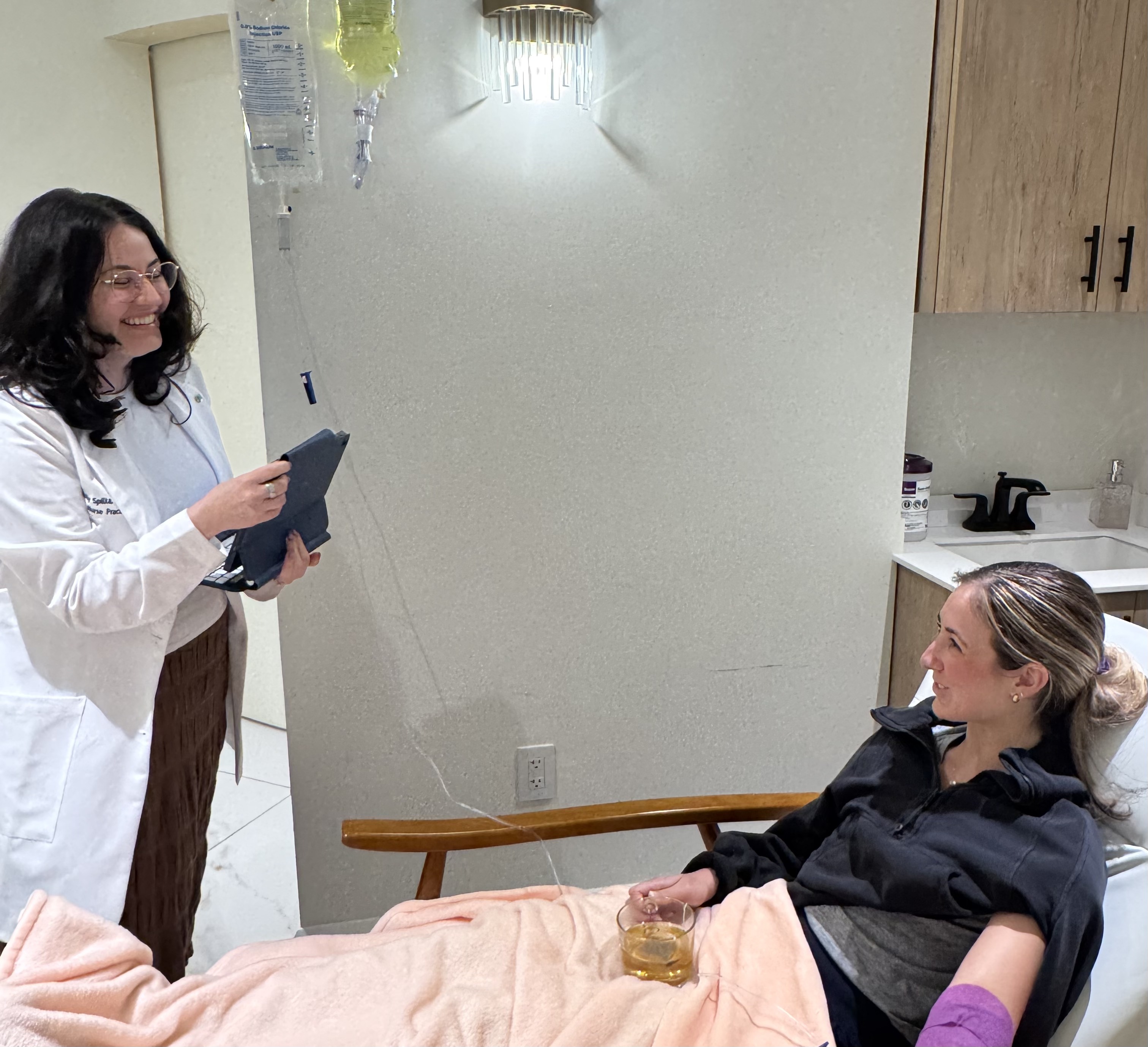
At our New York City practice, a migraine in early pregnancy is treated as a real visit, not a brush-off. That means same day evaluation by an OB/GYN, a blood pressure check to rule out the things that matter, and IV fluids and anti-nausea support when the vomiting and dehydration spiral has taken hold. The goal is simple: stop the loop, confirm the baby is fine, and send a woman home feeling like herself again, without an ER bill for something that was never an emergency. Same week appointments are available, and the early weeks are exactly what this care was built for. Book IV hydration and migraine support today.
Migraine in Pregnancy Questions
Are migraines in early pregnancy normal?
Yes, they are common, especially in the first trimester when hormones shift quickly and nausea and dehydration are at their peak. Many women notice attacks ease as pregnancy continues. A new, sudden, or unusually severe headache is still worth checking.
Can a migraine hurt the baby?
The migraine pain itself does not harm the baby. The concern is what a severe or new headache can occasionally signal, such as rising blood pressure, which is why a changing headache in pregnancy deserves an evaluation rather than a guess.
What can I take for a migraine while pregnant?
Acetaminophen is the first choice and can be combined with a little caffeine. Many other migraine medications, including ibuprofen and some prescription options, are limited or avoided in pregnancy, so it is best to confirm with a provider who knows the current guidance.
When should I go in for a headache during pregnancy?
Be seen the same day for a sudden severe headache, vision changes, swelling in the hands or face, upper right belly pain, fever with a stiff neck, or vomiting that makes keeping fluids down impossible. These can point to issues that are very manageable when caught early.
Do IV fluids help a pregnancy migraine?
Often, yes, when dehydration from nausea and vomiting is feeding the migraine. Replacing fluids and calming the nausea can break the cycle that keeps the pain going, which is part of the same day care Materna offers in New York City.
The bottom line
A migraine in pregnancy is miserable, but it is rarely dangerous, and it is rarely something a woman should have to ride out alone. Safe relief exists, the warning signs are few and clear, and early care is the easiest part to get right. If a headache has a woman worried tonight, that worry deserves a real answer, not another search result. Book a same week appointment with Materna.
Related reading from Materna
Not ready to book yet? Start with our free guide.
Get the free guideWe're here for you - from the start
We’re redefining maternal health by replacing the ER with a welcoming, evidence-based care environment that centers you: your body, your symptoms, your experience.
Schedule a visit
Compassionate support for every stage of pregnancy
Contact
Connect with our dedicated support team
Phone
Direct line for immediate healthcare guidance
Office
Women's health center in
130 7th Ave S NY, NY 10014
130 7th Ave S NY, NY 10014
Related blogs and articles

When Does Morning Sickness Start and End? Week by Week
When does morning sickness start? Usually weeks 4 to 6, peaking near week 9 and easing by weeks 14 to 22. Same-day nausea care in NYC. Book a visit.

Signs of Implantation: Cramping, Spotting, and Timing
Signs of implantation explained: cramping, spotting, timing, and when a blood test turns positive. Same-day early pregnancy visits in Manhattan.

Losing Weight in the Second Trimester: What It Means
Losing weight in the second trimester and not nauseous? An NYC OB/GYN explains the causes, when to worry, and the labs to ask for. Same-day visits.