
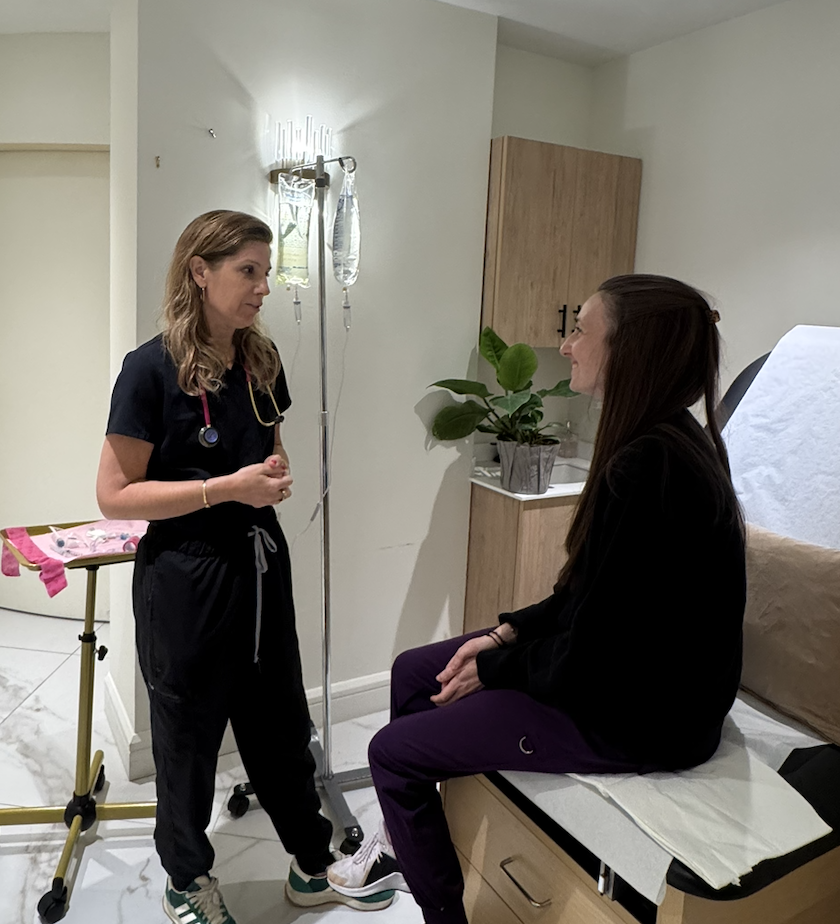
I have been a midwife for 22 years. I have had the profound privilege of being at more than 2,000 births and walking alongside thousands of women through pregnancy, labor, and the months that follow.
What I know from all of those experiences is that birth is not an ending. It is the beginning of a full year of transformation, physical, emotional, mental, and spiritual. And the women who understand that tend to move through it with far more grace, patience, and kindness toward themselves.
What follows is the arc of that year as I have watched it unfold, in four quarters. It is not a clinical checklist. If a checklist is what you need, our companion piece covers what postpartum care should actually include, and which symptoms mean you should be seen. This is the other half of the picture: what the year feels like from the inside.
This is not a criticism of any individual provider. The clinicians in this field work hard and care deeply. This is about a system that was not designed with the postpartum year in mind. That needs to change, and it can.
What a Real Postpartum Assessment Looks Like
Before we get to the arc of the year, let us talk about what early postpartum care actually requires. Because even the most thorough six week visit tends to focus on the most visible markers of recovery while leaving a great deal unexamined.
A true head to toe postpartum assessment looks like this.
Skin assessment. Stretch marks, changes in pigmentation, incision healing, and shifts in skin texture are all worth evaluating and discussing. The skin changes of pregnancy and postpartum are real, they are normal, and women deserve to understand what they are seeing and why it is happening.
Breast changes. Whether a woman is breastfeeding or not, her breast tissue has been through a significant hormonal transition. Changes in size and shape, nipple sensitivity, engorgement, and the process of milk coming in or being suppressed all deserve clinical attention and honest conversation.
The abdominal wall. Diastasis recti, the separation of the abdominal muscles that occurs during pregnancy, affects the majority of postpartum women to some degree. It is treatable and manageable, but first it has to be assessed. Returning to core exercise without understanding the state of the muscles underneath is not just ineffective. It can make things worse.
The pelvic floor. This may be the most underserved area of postpartum care in the entire system. The pelvic floor supports the bladder, bowel, and uterus. It has just sustained months of increasing pressure followed by the demands of labor and delivery, whether vaginal or cesarean. Leaking, heaviness, pelvic pressure, and pain are not inevitable permanent features of life after birth. They are signs that the pelvic floor needs attention, and that attention is available and effective.
Sexual health planning. A return to intimacy after birth is not one size fits all. Pain, hormonal shifts, changes in lubrication, psychological readiness, and the reality of being a new parent all matter deeply. A six week clearance does not address any of this. A real conversation does.
Neurological and skeletal changes. Many women experience carpal tunnel syndrome, nerve sensitivity, and joint instability during and after pregnancy because of the hormone relaxin and the physical demands of carrying and delivering a baby. These symptoms are real, they affect daily life, and they are often minimized or dismissed. Vision changes, persistent headaches, and postpartum neurological symptoms also deserve assessment and follow through.
Every one of these areas deserves clinical attention in the early postpartum weeks. Not as a luxury, but as a baseline.
The Year in Four Quarters
Now to the framework that I have seen hold true across more than two decades of practice.
Recovery does not happen all at once. It moves in stages. And when women can see those stages clearly, they can stop measuring themselves against an imaginary timeline and start understanding where they actually are.
The First Quarter: Physical Recovery
The first three months postpartum are largely dominated by the physical. Healing tissue, shifting hormones, managing sleep deprivation, nourishing another human being with your body, and simply surviving the days. This is not the time to optimize. It is the time to be held, to rest whenever possible, and to trust that the body is doing enormous work even when it does not feel like it from the inside. The physical recovery happening beneath the surface during this quarter is remarkable.
The Second Quarter: Emotional Recovery
Somewhere between months three and six, many women begin to surface from the acute physical demands and find themselves sitting with the experience they just had. Birth is singular. There is no other event quite like it, and every birth carries with it a unique emotional landscape. Some births are exhilarating. Some are frightening. Many are both at once. Some leave women with feelings that have not yet had the space to be fully processed.
That processing belongs here. Difficult feelings about your birth experience are valid and they are more common than the silence around them suggests. Having support available during this quarter, whether from a provider, a therapist, a partner, or a community, matters enormously. You are not behind. You are right on time.
The Third Quarter: Mental Recovery
By months six through nine, something begins to shift. Sleep is incrementally better. The cognitive fog that has been a near constant companion since birth begins, slowly, to lift. You start to remember who you are outside of this role. You have moments of feeling like yourself again, fleeting at first, then more frequent. The sharpness returns. The words come easier. You begin to reclaim your own mind.
This is the quarter of returning. It is quiet but it is real, and it deserves to be recognized.
The Fourth Quarter: Spiritual Recovery and Integration
This is the one that gets talked about least, and it may be the most significant of all.
In the final stretch of the first postpartum year, many women find themselves engaged in a quiet but profound process of integration. The person who walked into the delivery room no longer exists in exactly the same form. A new version has emerged, one who has done something extraordinary and been changed by it. The work of this quarter is learning to hold both of those versions at once. To honor who you were, to embrace who you are becoming, and to understand that both are true simultaneously.
That is spiritual work in the truest sense of the word.
And here is what I need you to know: none of this moves on a fixed timeline. For some women, these four quarters map closely onto the first calendar year. For others, recovery takes two years, or three, or five. There is no wrong pace. There is no point at which you should be further along than you are. The integration happens when it is ready to happen, and it will happen.
Nourishing Your Recovery
A few honest words on nutrition, movement, and weight.
Your body just did something remarkable. It grew a human being, delivered that human being into the world, and is now sustaining that human being while simultaneously trying to heal itself. It does not need punishment, restriction, or a deadline. It needs nourishment.
Postpartum nutrition is about adequacy, not reduction. Protein to rebuild tissue. Iron to replenish what was lost. Omega 3 fatty acids to support brain function. Sufficient calories to fuel healing and, if applicable, milk production. Hydration. These are the foundations.
Movement, when the body is ready, is genuinely restorative. Gentle walking. Breathwork. Pelvic floor rehabilitation with a qualified physical therapist. These are powerful starting points. A return to more vigorous activity should be guided by your body and your care team, not by a date on a calendar.
Weight and body composition, if they are goals, belong to the second half of the postpartum year at the earliest, and only in the context of nourishment, not deprivation. The women who serve themselves best are the ones who decide, early, that their body deserves to be fed and restored before it is asked to change.
A Different Kind of Care
I became a midwife because I believe in the capacity of the human body and the power of being genuinely seen during one of the most significant experiences of a life. Twenty two years and more than 2,000 births later, I have never once heard a woman say that postpartum recovery was easier than she expected. But I have watched thousands of women move through it with more support, more information, and more compassion for themselves, and the difference is real.
The postpartum year is not a period to endure. It is a season of becoming. One that deserves a full year of care, attention, and honest conversation to match.
Six weeks is the beginning. Not the end.
Not ready to book yet? Start with our free guide.
Get the free guideWe're here for you - from the start
We’re redefining maternal health by replacing the ER with a welcoming, evidence-based care environment that centers you: your body, your symptoms, your experience.
Schedule a visit
Compassionate support for every stage of pregnancy
Contact
Connect with our dedicated support team
Phone
Direct line for immediate healthcare guidance
Office
Women's health center in
130 7th Ave S NY, NY 10014
130 7th Ave S NY, NY 10014
Related blogs and articles

Iron Infusion in the Third Trimester: Is It Too Late?
Iron infusion in the third trimester is not too late. How fast it works, side effects, 34 to 38 weeks, and same-day IV iron at Materna in NYC.

Genetic Testing for Women: Which Tests and When
Genetic testing for women by life stage: carrier screening, prenatal screening, and hereditary cancer testing, explained by an NYC women's health team.

BRCA Testing Before Pregnancy: What to Know
BRCA testing before pregnancy gives you more choices. An NYC women's health team explains who it fits and how it works. Visits available this week.