
If you are vomiting so much that you cannot eat, cannot drink, and cannot get through a normal day, you are not experiencing “bad morning sickness.” You may have hyperemesis gravidarum, and it is a real medical condition with a real biological cause, real risks when it goes untreated, and real treatments that work.
This guide covers what HG actually is, how to measure how severe yours is, and what evidence-based treatment looks like, drawing on the current clinical guidelines from ACOG (the American College of Obstetricians and Gynecologists), the UK’s Royal College of Obstetricians and Gynaecologists, the Society of Obstetricians and Gynaecologists of Canada, and the HER Foundation, the leading HG research and advocacy organization.
What Hyperemesis Gravidarum Actually Is
HG affects roughly 0.3 to 3 percent of pregnancies. It sits at the far end of the nausea-and-vomiting spectrum, past the point where “morning sickness” stops being an adequate description.
For decades, HG was diagnosed inconsistently, and many women were told they didn’t “qualify” because they hadn’t lost enough weight or didn’t have ketones in their urine. That changed in 2021, when an international consensus of researchers, clinicians, and patients produced the Windsor definition of HG. Under it, HG is diagnosed when all of the following are true:
- Symptoms start in early pregnancy, before 16 weeks
- Nausea and vomiting are present, and at least one is severe
- You are unable to eat or drink normally
- The symptoms strongly limit your daily activities
Notice what is not on that list: a weight-loss cutoff and urine ketones. Losing more than 5 percent of your pre-pregnancy weight is a classic warning sign that clinicians still take seriously, but current consensus diagnoses HG based on how sick you are and how much it limits your life, not on hitting a number. And the Royal College’s 2024 guideline explicitly dropped ketone testing, finding that ketones are neither an accurate indicator of dehydration nor a useful measure of severity. If you were ever sent home because “your ketones look fine,” that reasoning is now outdated.
HG Has a Biological Cause. It Is Not Weakness, and It Is Not in Your Head.
In late 2023, research published in Nature identified the hormone GDF15 as a primary driver of pregnancy nausea, vomiting, and HG. GDF15 is produced in large amounts by the placenta in early pregnancy and acts directly on the nausea center in the brainstem. Your risk depends on both how much of the hormone the pregnancy produces and how sensitive your body is to it. Women whose GDF15 levels were low before pregnancy tend to be the most sensitive to its sudden surge, which helps explain why HG can strike women who were perfectly healthy before.
This discovery matters for two reasons. Practically, it points toward future prevention strategies that are already being studied. And personally, it settles an old and damaging myth: HG is a physiological disease with an identified biological mechanism. It is not a character flaw, an anxiety problem, or something you could overcome by trying harder.
How Severe Is Your HG? Take the HELP Score.
Severity is where HG care starts. Modern guidelines recommend assessing HG with a validated scoring tool, and the most sensitive one available is the HELP Score (HyperEmesis Level Prediction), developed by HER Foundation researchers. It asks about the last 24 hours: how often you are vomiting, what you can keep down, how you are functioning, and how you are coping. In its validation study it identified 92 percent of the sickest patients as severe, compared to 58 percent for the older PUQE score. Scores of 20 to 32 suggest moderate disease, and 33 or higher suggest severe disease.
Take the HELP Score now
It takes about three minutes, and our clinical team reviews every submission. If your score suggests moderate or severe HG, we will reach out about same-day or next-day treatment options.
At Materna we also re-score patients at each visit, because a falling HELP Score is objective evidence your treatment is working, and a stubborn one tells us to escalate.
Why HG So Often Goes Undiagnosed and Undertreated
Two forces work against women with HG. The first is cultural: the myth that all pregnancy nausea is normal, so sufferers are handed crackers and ginger tea and told to wait it out. Many women internalize this and stop advocating for themselves, sometimes for weeks, while they become steadily more dehydrated and depleted.
The second is structural. Many clinicians receive little training on HG specifically. Emergency rooms treat the immediate dehydration and discharge without a plan for the chronic condition. And between OB appointments spaced four weeks apart, there is often simply nowhere to go, which is precisely the gap Materna was built to fill.
What Untreated HG Can Lead To
Treated early and properly, HG is manageable, and most women with HG have healthy pregnancies and healthy babies. The risks below are overwhelmingly risks of untreated HG, which is the strongest argument for taking it seriously early.
For you
- Dehydration and electrolyte imbalance, the most common complications, and the reason IV fluids are a cornerstone of treatment
- Malnutrition and weight loss, including iron deficiency and anemia
- Wernicke encephalopathy, a rare but serious neurological emergency caused by thiamine (vitamin B1) deficiency. It is essentially entirely preventable, which is exactly why proper HG protocols give thiamine before IV fluids that contain dextrose
- Blood clots: dehydration and immobility raise clot risk, which is why UK guidelines include clot-risk assessment in HG care
- Mental health effects: depression, anxiety, isolation, and in some cases post-traumatic stress that outlasts the pregnancy. These are consequences of a brutal untreated illness, not causes of it
For your baby
Severe, prolonged, undertreated HG is associated with higher rates of low birth weight and preterm birth. Some researchers have also observed associations between severe untreated HG and developmental differences in children, though this evidence is preliminary and does not establish cause and effect. The practical takeaway from all of it points the same direction: treating HG early and maintaining hydration and nutrition protects both of you.
How HG Is Treated: The Evidence-Based Ladder
All three major guidelines, American, British, and Canadian, describe a stepwise approach. The steps below are what the evidence supports; where you start on the ladder depends on how severe your symptoms already are.
Step 1: First-line medication
Vitamin B6 (pyridoxine), alone or combined with doxylamine, is the recommended first-line treatment in the American and Canadian guidelines, based on decades of safety and efficacy data. Dietary tactics like small frequent meals help some women, but diet alone is not a treatment for HG.
Step 2: Escalating anti-nausea medications
When first-line therapy is not enough, clinicians add antiemetics from different drug classes, including antihistamines and dopamine antagonists such as metoclopramide, and ondansetron where appropriate. The 2024 Royal College guideline notes that combining medications with different mechanisms works better than relying on one drug alone. Ondansetron use in the first trimester involves an individualized risk-benefit conversation with your clinician, which is exactly the kind of conversation HG patients should be able to have with someone who knows this disease.
Step 3: IV hydration, vitamins, and nutritional support
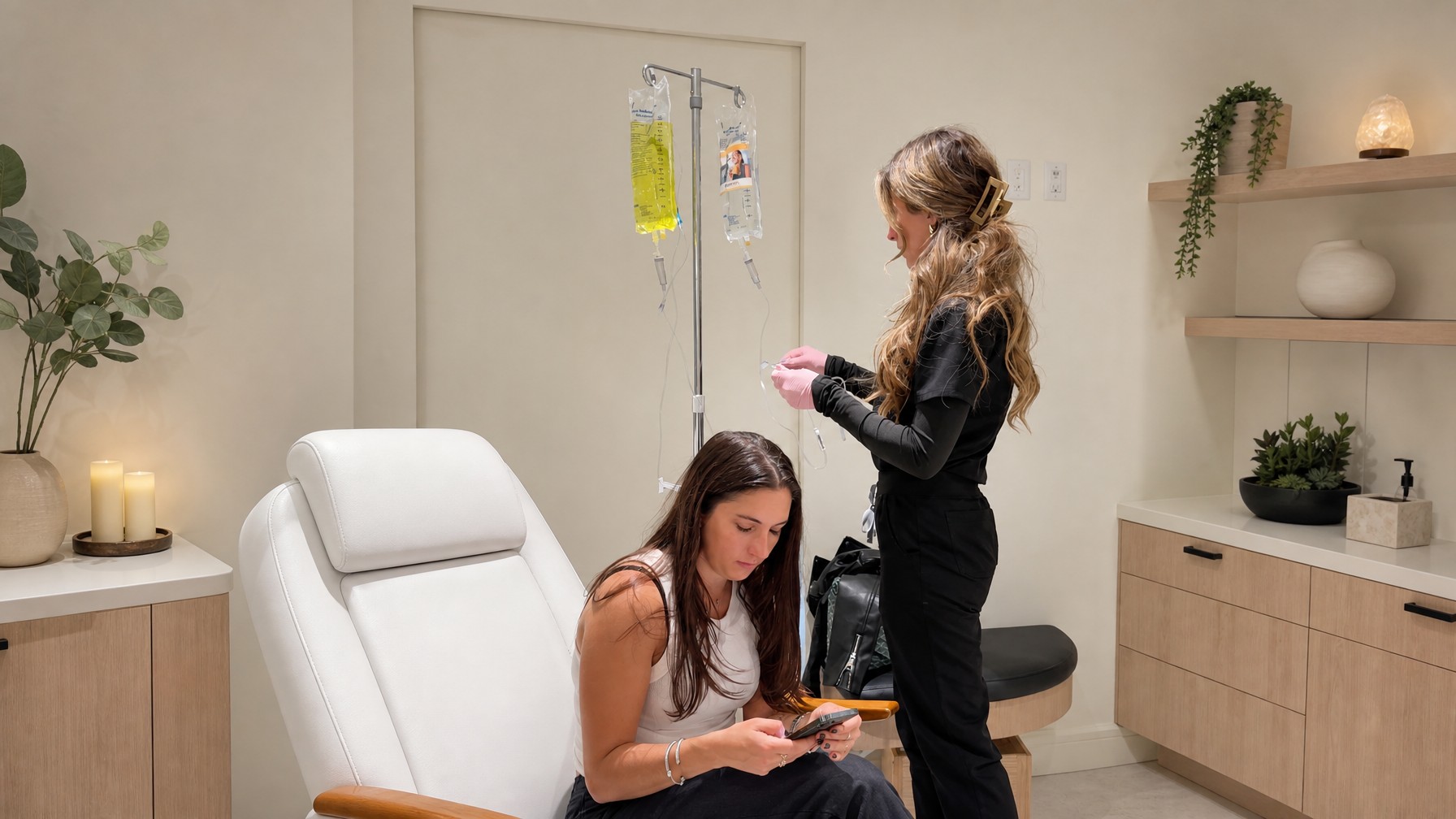
When you cannot keep liquids down or show signs of dehydration, IV fluids are indicated. Done properly, this includes thiamine before any dextrose-containing fluids, electrolyte correction, and often IV vitamins and anti-nausea medication in the same session. This is the core of what we do at Materna, on a schedule, before you end up in the ER. Learn more about IV hydration for pregnancy at Materna.
Step 4: Options for refractory HG
For severe HG that does not respond to standard treatment, corticosteroids are endorsed by both ACOG and the Royal College as a later-line option, managed by clinicians experienced with HG.
If you have had HG before
Prior HG is the strongest known predictor of having it again; estimates of recurrence vary widely between studies, from roughly one in six to the large majorities reported in HG-patient communities. The 2024 Royal College guideline recommends women with previous HG be offered a pre-emptive plan, starting the medications that worked for you before symptoms take hold. If you are planning another pregnancy after HG, that plan should exist before the positive test.
How Materna Treats HG
Materna was built around a simple observation: the standard system leaves HG patients with a four-week wait or an ER visit, and nothing in between. Our model is the in-between, and it matches what the current evidence recommends:
- Early intervention. ACOG notes that treating nausea and vomiting early may help prevent progression to severe disease. You do not need to wait until you are in crisis to be seen. Same-day and next-day appointments exist for exactly this.
- Outpatient IV therapy, on a schedule. The 2024 Royal College guideline explicitly endorses ambulatory day-case management of HG. For active HG we typically provide structured IV hydration with vitamins, commonly 2 to 3 times weekly, adjusted to your HELP Score and your response, so you stay ahead of dehydration instead of chasing it.
- Protocolized, personalized medication management. We follow the guideline ladder, track your response objectively, and adjust, including the medications conversation many patients never get to have.
- A team that knows HG. Your care is overseen by a team that includes an emergency physician, a certified nurse midwife, and a maternal-fetal medicine specialist, available in person and virtually.
Sick now?
You will be seen the same day or next day by clinicians who treat this condition every week, and you will leave with a treatment plan in hand.
Frequently Asked Questions
What should I eat with HG?
Whatever stays down, whenever it stays down. With HG, the usual food rules are suspended; calories and fluids are the goal, and “perfect nutrition” can wait until you are treated. Small, frequent, cold, low-odor foods tolerate best for many women. We wrote a full HG dietary guide with specifics.
Is HG a disability? Can I take time off work?
HG can qualify for workplace accommodations and protected leave depending on your situation. We covered your options in detail in HG at work: your rights and protections.
Will HG hurt my baby?
With treatment, the outlook is reassuring: most women with HG deliver healthy babies. The documented risks concentrate in severe, prolonged, untreated HG, which is why early treatment is the single most protective thing you can do.
When does HG end?
For many women symptoms improve substantially by mid-pregnancy, but for a significant minority HG persists until delivery. Either way, treatment changes what those weeks feel like, and your care plan should assume the long haul rather than promise week 14.
Will I get HG in my next pregnancy?
Your risk is substantially elevated, though estimates vary widely between studies. What is not variable: a pre-emptive plan, built with a clinician before or at the very start of the next pregnancy, reduces severity. That is a preconception appointment we would be glad to have with you.
Materna Healthcare provides same-day, specialist-level care for hyperemesis gravidarum, pregnancy nausea, and early-pregnancy needs at 130 7th Ave South in Manhattan’s West Village. Learn more about our HG treatment program or take the HELP Score.
References
- ACOG Practice Bulletin No. 189: Nausea and Vomiting of Pregnancy. Obstetrics & Gynecology. 2018. acog.org
- RCOG Green-top Guideline No. 69: The Management of Nausea and Vomiting of Pregnancy and Hyperemesis Gravidarum. February 2024. rcog.org.uk
- SOGC Clinical Practice Guideline No. 339: The Management of Nausea and Vomiting of Pregnancy and Hyperemesis Gravidarum. Journal of Obstetrics and Gynaecology Canada. 2016. jogc.com
- Jansen LAW, Koot MH, et al. The Windsor definition for hyperemesis gravidarum: A multistakeholder international consensus definition. European Journal of Obstetrics & Gynecology and Reproductive Biology. 2021.
- MacGibbon KW, et al. HyperEmesis Level Prediction (HELP Score) Identifies Patients with Indicators of Severe Disease: a Validation Study. 2021.
- Fejzo M, et al. GDF15 linked to maternal risk of nausea and vomiting during pregnancy. Nature. 2024;625:760 to 767. nature.com
- HER Foundation: HELP Score and diagnostic resources. hyperemesis.org
Not ready to book yet? Start with our free guide.
Get the free guideWe're here for you - from the start
We’re redefining maternal health by replacing the ER with a welcoming, evidence-based care environment that centers you: your body, your symptoms, your experience.
Schedule a visit
Compassionate support for every stage of pregnancy
Contact
Connect with our dedicated support team
Phone
Direct line for immediate healthcare guidance
Office
Women's health center in
130 7th Ave S NY, NY 10014
130 7th Ave S NY, NY 10014
Related blogs and articles

When Does Morning Sickness Start and End? Week by Week
When does morning sickness start? Usually weeks 4 to 6, peaking near week 9 and easing by weeks 14 to 22. Same-day nausea care in NYC. Book a visit.

Signs of Implantation: Cramping, Spotting, and Timing
Signs of implantation explained: cramping, spotting, timing, and when a blood test turns positive. Same-day early pregnancy visits in Manhattan.

Losing Weight in the Second Trimester: What It Means
Losing weight in the second trimester and not nauseous? An NYC OB/GYN explains the causes, when to worry, and the labs to ask for. Same-day visits.