
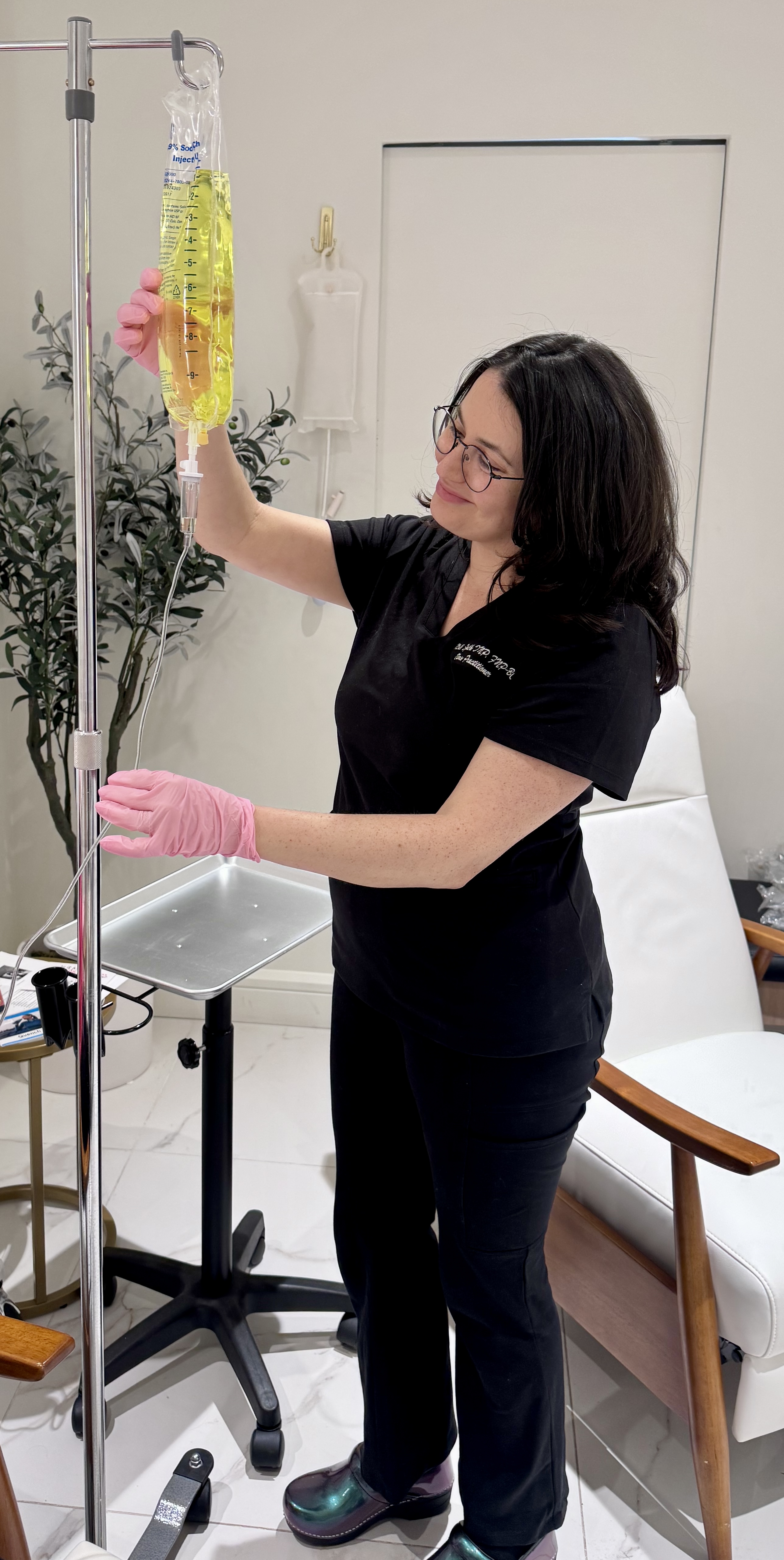
Iron infusion during pregnancy is one of the most underused tools in maternal care, and one of the most misunderstood. Most pregnant patients are handed a prescription for oral iron and told it will be fine. For many, it is. For others, oral supplementation fails silently, anemia worsens, and no one escalates to IV iron until the situation is significantly more difficult to correct. Here is what the evidence says, and how to know which category you are in.
What Iron Deficiency Anemia in Pregnancy Actually Looks Like
Iron deficiency anemia (IDA) affects more than one third of pregnant patients globally. In the United States, the rates are lower but still clinically significant, particularly in the second and third trimesters when the fetal demand for iron increases sharply.
The symptoms are often dismissed as normal pregnancy fatigue: exhaustion that is disproportionate to how much sleep you are getting, shortness of breath with minimal exertion, a heart rate that feels elevated, difficulty concentrating, and sometimes a persistent craving for ice or non-food substances called pica. None of these symptoms on their own confirm anemia, but together, and in context of your labs, they tell a clear story.
The standard thresholds for anemia in pregnancy are a hemoglobin below 11 g/dL in the first trimester, below 10.5 g/dL in the second, and below 11 g/dL in the third. But hemoglobin alone misses early iron depletion. Ferritin, which reflects your iron stores, can be low long before hemoglobin falls. A ferritin below 30 ng/mL in pregnancy warrants attention even if your hemoglobin looks adequate.
When Oral Iron Stops Working
Oral iron is the appropriate first line treatment for most cases of iron deficiency in pregnancy. But it has real limitations that are frequently underdiscussed.
Oral iron is poorly absorbed, particularly in the presence of nausea and vomiting, which are common in the first and early second trimester. Even when tolerated, absorption varies significantly from person to person and is affected by other nutrients, the timing of meals, and gastrointestinal function. Oral iron also commonly causes constipation, nausea, and stomach discomfort, which leads many patients to stop taking it or take it inconsistently.
A 2025 meta-analysis involving six randomized and cohort studies and 3,842 patients found that IV iron increased maternal hemoglobin by an average of 1.21 g/dL more than oral iron and was more than twice as effective at correcting anemia. For patients who are not absorbing oral iron, IV iron is not a last resort. It is the clinically appropriate next step.
IV iron is generally recommended when hemoglobin falls below 10 g/dL at or after 34 weeks, when oral iron has failed after 4 to 6 weeks of consistent use, when GI side effects make oral iron unsustainable, or when there is significant anemia in the third trimester and not enough time for oral supplementation to work before delivery. Early third trimester infusions produce meaningfully better hemoglobin response than infusions given close to the due date, so timing matters.
If your iron is low and you want to understand whether IV iron is right for you, book a visit at Materna. We review your full iron panel in the context of your pregnancy and build a protocol around what we actually find. Same-week appointments available.
Is IV Iron Safe in Pregnancy?
The evidence on safety is strong and has been growing. A 2025 retrospective study of 417 pregnant patients who received IV iron in an outpatient obstetric setting found that the treatment was well tolerated, with side effects in only 11.5% of patients, all minor, including dizziness in 6.2% and headache in 1.9%. There were no cases of anaphylaxis.
The Society for Maternal-Fetal Medicine published findings from a large randomized trial in early 2025 supporting single-dose IV iron as a primary treatment option for moderate anemia due to iron deficiency in pregnancy, with researchers calling for updated clinical guidelines to reflect this evidence.
Older concerns about anaphylaxis were largely associated with older iron formulations that are no longer in common use. Modern IV iron preparations, including iron sucrose and ferric carboxymaltose, have a very low rate of serious reactions, estimated at less than 0.1%. The infusion is typically administered over 30 to 60 minutes in a monitored setting.
IV iron is generally considered safe after the first trimester. At Materna, all IV iron infusions are administered in our private West Village infusion suite under OB supervision.
What to Expect at an Iron Infusion Visit
The infusion itself takes 30 to 60 minutes depending on the formulation and dose. You are seated comfortably throughout. A small IV is placed and the iron solution is administered slowly. Most patients feel nothing during the infusion. Some experience mild warmth or a slight metallic taste, which resolves quickly.
After the infusion, you remain in the suite briefly for monitoring. You can return to your normal activities the same day. Most patients notice an improvement in energy within one to two weeks. A follow-up hemoglobin and ferritin check is typically done 4 weeks after the infusion to assess the response.
At Materna, your infusion visit includes a clinical review of your full iron panel before and after treatment. We do not administer IV iron based on hemoglobin alone. We look at ferritin, transferrin saturation, and your complete blood count, alongside your symptoms and trimester, before recommending a protocol.
Iron Infusion During Pregnancy FAQs
How do I know if I need an iron infusion versus oral iron?
If your ferritin is below 30 ng/mL, your hemoglobin is below 10 g/dL, you are in the third trimester with significant anemia, or you have been taking oral iron consistently for 4 to 6 weeks without improvement, IV iron is worth discussing with your provider. GI intolerance that is making oral iron unsustainable is also a valid clinical reason to move to IV.
Can an iron infusion hurt the baby?
IV iron does not cross the placenta in a way that poses risk to the fetus. The current evidence, including multiple recent randomized trials, supports the safety of IV iron formulations for both the pregnant patient and the fetus when administered after the first trimester.
How many infusions will I need?
Many patients require only one infusion. The dose depends on your weight, the severity of your deficiency, and your hemoglobin at the time of treatment. Your provider will calculate the appropriate dose based on your labs. A follow-up check 4 weeks later confirms whether additional treatment is needed.
Is there any prep required before an iron infusion?
No special preparation is needed. Eating beforehand is generally recommended to minimize the small risk of lightheadedness. You should bring a list of any medications you are taking, as some can interact with IV iron timing.
Will I feel better right away?
Hemoglobin response typically takes 2 to 4 weeks to be fully measurable in labs. Symptom improvement, particularly in energy and shortness of breath, often begins within 1 to 2 weeks of the infusion.
What This Means at Materna
At Materna, we do not wait for anemia to become severe before taking action. When you come to us with fatigue, breathlessness, or a low ferritin result your OB has not yet addressed, we review your full iron picture, iron, ferritin, transferrin saturation, hemoglobin, in the context of your trimester and your symptoms. If IV iron is clinically indicated, we can administer it the same week in our private West Village infusion suite.
We treat iron deficiency as the real clinical issue it is, not as a footnote in your prenatal bloodwork. If you are pregnant and concerned about your iron levels, we would like to take a closer look. Book a visit at Materna. Same-week appointments available.
Not ready to book yet? Start with our free guide.
Get the free guideWe're here for you - from the start
We’re redefining maternal health by replacing the ER with a welcoming, evidence-based care environment that centers you: your body, your symptoms, your experience.
Schedule a visit
Compassionate support for every stage of pregnancy
Contact
Connect with our dedicated support team
Phone
Direct line for immediate healthcare guidance
Office
Women's health center in
130 7th Ave S NY, NY 10014
130 7th Ave S NY, NY 10014
Related blogs and articles

Iron Infusion in the Third Trimester: Is It Too Late?
Iron infusion in the third trimester is not too late. How fast it works, side effects, 34 to 38 weeks, and same-day IV iron at Materna in NYC.

Genetic Testing for Women: Which Tests and When
Genetic testing for women by life stage: carrier screening, prenatal screening, and hereditary cancer testing, explained by an NYC women's health team.

BRCA Testing Before Pregnancy: What to Know
BRCA testing before pregnancy gives you more choices. An NYC women's health team explains who it fits and how it works. Visits available this week.