

If you are pregnant and feel exhausted in a way that sleep cannot fix, short of breath climbing a single flight of stairs, or dizzy when you stand up from the couch, it may not just be pregnancy. It may be iron deficiency. And it is more common than almost anyone realizes.
Iron deficiency affects up to 70 percent of pregnancies in the United States, and iron deficiency anemia, the more advanced form, affects close to one in five pregnant women. For Black and Hispanic women in particular, the rates are significantly higher. Yet iron deficiency is still routinely underdiagnosed, undertreated, and dismissed as ordinary pregnancy fatigue. At Materna, we think that has to change.
Why Iron Matters So Much in Pregnancy
Iron is the raw material your body uses to make hemoglobin, the protein in red blood cells that carries oxygen to your tissues and to your baby. When you are pregnant, your blood volume expands by nearly 50 percent to support the placenta and the growing fetus. That expansion requires an enormous amount of iron. Your daily iron requirement jumps from roughly 18 milligrams before conception to 27 milligrams during pregnancy, and even that number is a floor rather than a ceiling for many women.
When iron stores fall short, every system that depends on oxygen delivery starts to struggle. You feel it as fatigue, breathlessness, brain fog, racing heart, restless legs at night, and hair shedding. Your baby feels it too. Maternal iron deficiency anemia is associated with preterm delivery, low birth weight, postpartum anemia, an increased likelihood of blood transfusion at delivery, and measurable effects on fetal neurocognitive development that can last well beyond infancy.
This is not a minor deficiency to shrug off. Iron is foundational to a healthy pregnancy, and correcting it early changes outcomes.
How Iron Deficiency Is Missed
It is common for somepractices screen for anemia with a basic complete blood count in the first trimester and again around 24 to 28 weeks. That catches anemia once it has already developed. What it misses is iron deficiency without anemia, the far more common and earlier stage of the problem, where your hemoglobin still looks normal but your iron stores are already depleted.
The test that actually tells the full story is ferritin, a measurement of your stored iron. Current consensus guidelines now recommend routine ferritin screening at the first prenatal visit and again at 24 to 28 weeks, with iron deficiency defined as a ferritin below 30. Many women walk into our office having been told their bloodwork is fine, only to find a ferritin in the single digits once we check. That is a fixable problem, and fixing it often transforms how someone feels within weeks.
At Materna, ferritin is part of our standard early pregnancy workup. We look for iron deficiency before it becomes anemia, because by the time hemoglobin drops, you have already been running on empty for months.
Oral Iron: Helpful, but Often Not Enough
For many women, oral iron supplements are an appropriate first step. Daily prenatal vitamins with iron, or a dedicated oral iron supplement, can restore stores gradually when deficiency is caught early and absorption is working well. Recent evidence even suggests that taking iron every other day rather than every day is just as effective and significantly easier on the stomach.
But oral iron has real limits in pregnancy. It causes nausea, constipation, abdominal pain, and metallic taste in a substantial percentage of women, which is especially brutal when you are already navigating first trimester nausea. It is also absorbed slowly and inefficiently. Many women with true iron deficiency simply cannot catch up with pills alone, particularly in the second and third trimesters when iron demand is highest and time to delivery is shortest.
If you have tried oral iron and felt worse, or tried it and felt no better, that is not a personal failure. That is the medication doing what oral iron often does in pregnancy. There is another option, and it works significantly faster.
IV Iron Infusions: What They Are and Why They Work
Intravenous iron delivers iron directly into your bloodstream through a small IV, bypassing the gut entirely. That means no nausea from the iron itself, no gastrointestinal side effects, no slow absorption, and no daily pill to remember. Most formulations can fully replete your iron stores in one or two sessions.
The evidence for IV iron in pregnancy is strong and getting stronger. A 2024 Cochrane review, the gold standard for evaluating medical evidence, found that IV iron compared with oral iron raises hemoglobin more effectively, reduces the rate of anemia at follow up, increases hemoglobin around the time of birth, and may reduce the need for blood transfusion at delivery, all without a meaningful increase in adverse events. Recent 2025 expert consensus recommendations now suggest that for women with iron deficiency anemia in the second and third trimesters, IV iron should be offered rather than oral iron wherever possible.
There are several excellent IV iron formulations available, including ferric carboxymaltose, ferric derisomaltose, iron sucrose, and ferumoxytol. The right choice for you depends on your clinical picture, your gestational age, your insurance, and logistics. IV iron is generally preferred starting in the second trimester, as oral iron is the recommended option in the first trimester while safety data for IV iron in that window is still accumulating.
What an IV Iron Infusion at Materna Looks Like
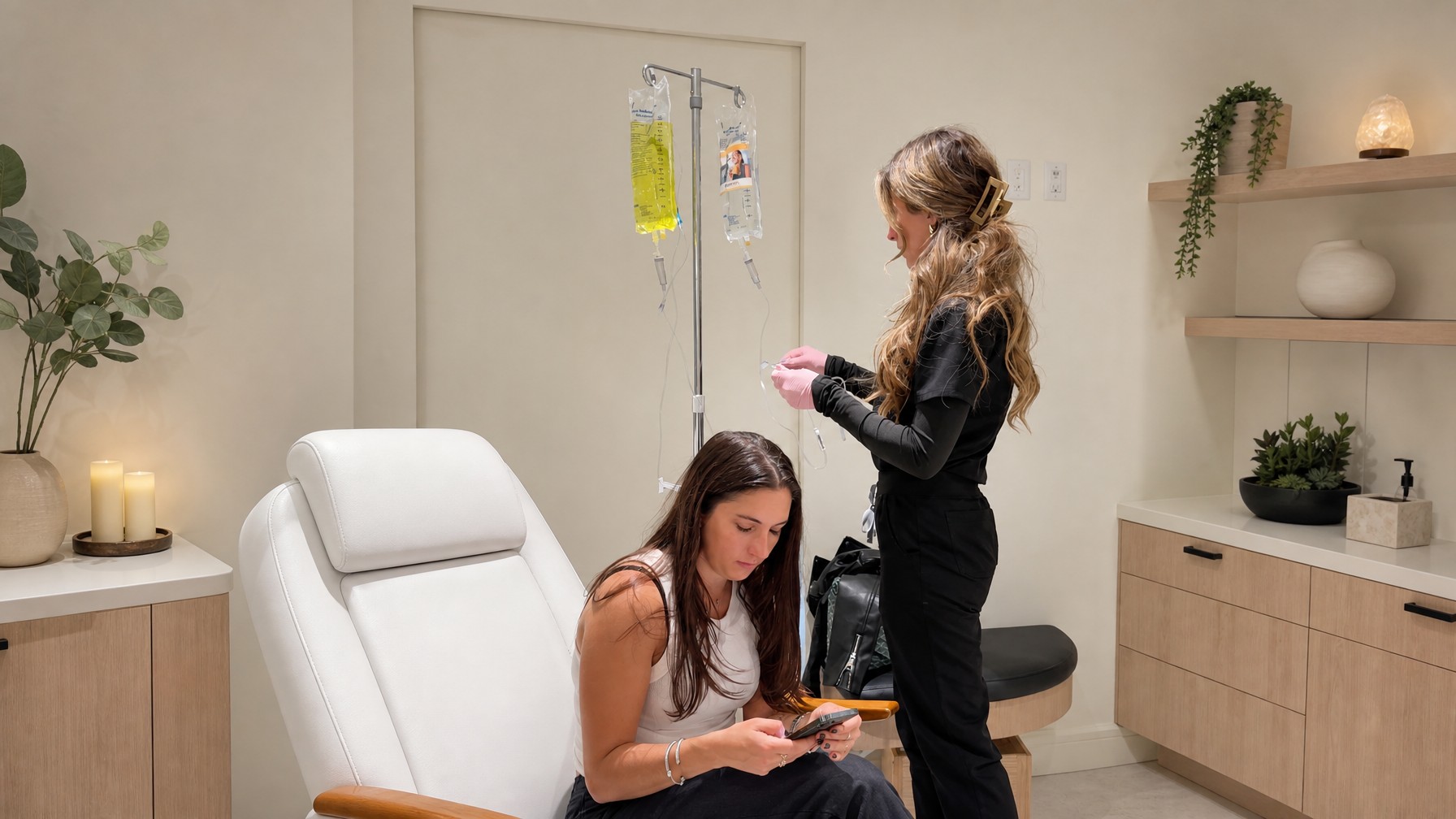
At Materna, an iron infusion is a calm, private appointment in our West Village office. You sit in a comfortable recliner, a small IV is placed, and the medication is infused over a set period depending on which formulation we use. Most appointments run between 60 minutes to 90 min. You can read, rest, work on your laptop, or simply exhale.
Before you come in, we run a full iron panel including ferritin, transferrin saturation, and hemoglobin, so we know exactly where you are starting and what dose makes sense for your pregnancy. After your infusion, we recheck your labs on a personalized schedule to confirm your stores are rebuilding and that you are feeling the difference.
Most women describe feeling noticeably better within two to four weeks: more energy, fewer dizzy spells, better sleep, steadier mood, and the ability to get through a day without hitting a wall by noon. It is not magic. It is what happens when your body finally has the iron it has been missing.
You Deserve to Feel Well in Pregnancy
Pregnancy is not supposed to feel like a medical condition you are barely surviving. If you are exhausted in a way that seems beyond ordinary, if you have tried oral iron and cannot tolerate it, or if you simply want to know where your ferritin actually stands, there is a better path forward.
Connect With Us and Book Your IV Iron Infusion
Materna is a boutique OB GYN practice in the West Village specializing in early pregnancy and first trimester care, and IV iron infusions are one of our most requested services for a reason. Same week appointments are available. Full iron panel testing, personalized treatment plans, and in office infusions are all part of what we do.
Call or text us at 917 938 7745, email hello@maternahealthcare.com, or book online at maternahealthcare.com. Contact us today to schedule your consultation and find out whether an IV iron infusion is the right next step for your pregnancy.
We're here for you - from the start
We’re redefining maternal health by replacing the ER with a welcoming, evidence-based care environment that centers you: your body, your symptoms, your experience.
Schedule a visit
Compassionate support for every stage of pregnancy
Contact
Connect with our dedicated support team
Phone
Direct line for immediate healthcare guidance
Office
Women's health center in
130 7th Ave S NY, NY 10014
130 7th Ave S NY, NY 10014
Related blogs and articles

hCG vs Progesterone Symptoms: What Is the Difference?
hCG vs progesterone symptoms overlap almost completely in early pregnancy. An NYC OB/GYN explains what each causes. Same day appointments available.
Hyperemesis Gravidarum: The Complete Guide
HG is a real disease with a real biological cause. Symptoms, the HELP Score, evidence-based treatment, and same-day care in Manhattan from Materna.

Prenatal Care in NYC: How to Find the Right Fit
Prenatal care in NYC, explained: hospitals, insurance, and providers, and how Materna helps you choose. Same-week appointments available.