
First Trimester Care · Materna
hCG Levels in Pregnancy:
The Complete Guide to Early Pregnancy Monitoring
What the "pregnancy hormone" really tells you, and why trends, timing, and ultrasound matter far more than a single number.
For many people, a positive hCG test is the very first confirmation that something life-changing is happening. But while hCG is widely discussed, it's frequently misunderstood, and a single number rarely tells the full story.
What Is the hCG Hormone?
Human chorionic gonadotropin (hCG) is a hormone produced by the placenta shortly after a fertilized egg implants in the uterine lining. Often called the "pregnancy hormone," hCG has one critical early job: signaling the body to keep producing progesterone, which maintains the uterine lining and supports the developing pregnancy.
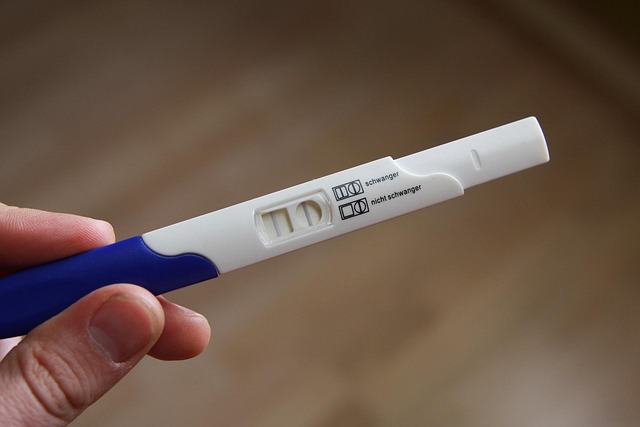
hCG is what both urine pregnancy tests and blood tests detect. But the way those tests are used, and what they can and cannot tell you, makes all the difference.
hCG begins rising after implantation, which typically occurs 6 to 10 days after ovulation, sometimes even before a missed period. Testing too early can produce false negatives; testing at the right time (and in the right way) gives you much more useful information.
hCG Levels in Pregnancy: What Is "Normal"?
One of the most important things to understand about hCG levels in pregnancy is that the range of normal is extremely wide. At around 5 weeks pregnant, for example, hCG can range anywhere from 18 to over 7,000 mIU/mL and still be entirely normal.
This means that comparing your number to a friend's, or to a chart you found online, is rarely useful. What matters is not where your hCG starts. It's how it changes over time.
hCG Level Reference: What to Expect
Approximate ranges by gestational week. Wide variation is normal. Trends matter more than any single value.
3 to 4 weeks
9 to 130 mIU/mL
Just after implantation
4 to 5 weeks
75 to 2,600
Wide range; serial testing most helpful
5 to 6 weeks
850 to 20,800
Gestational sac often visible on ultrasound
6 to 7 weeks
4,000 to 100,200
Fetal heartbeat typically detectable
7 to 12 weeks
Up to ~200,000
Peak period; levels plateau then decline
Second trimester
Declines
Levels fall and remain at lower plateau
How Quickly Should hCG Rise?
In a typical early intrauterine pregnancy, hCG roughly doubles every 48 to 72 hours, but "doubling" is a guideline, not a rule. The expected rate of rise actually depends on how high your levels already are:
| hCG Level (mIU/mL) | Expected rise every 48 hours | Interpretation |
|---|---|---|
| Below 1,500 | ~49% increase | Near-doubling is typical |
| 1,500 to 3,000 | ~40% increase | Slightly slower rise is normal |
| Above 3,000 | ~33% increase | Slower rise expected at higher levels |
Key takeaway: A slower-than-expected rise doesn't automatically indicate a problem. A faster rise is not necessarily better. Context, including ultrasound findings, symptoms, and gestational age, is essential to interpretation.
Serial hCG Testing: Why One Number Isn't Enough
A single hCG measurement, taken in isolation, tells you relatively little. It confirms pregnancy is present, but not much else. This is why clinicians use serial hCG testing: two or more blood draws taken 48 hours apart.
Serial testing reveals the trend: whether levels are rising appropriately, plateauing, or falling. This pattern, combined with clinical context, is what guides decisions about further evaluation or early pregnancy monitoring.
📈
Rising appropriately
Reassuring in early pregnancy, though ultrasound confirmation is still needed to confirm location and viability.
➡️
Plateau (not rising)
May indicate a pregnancy that is not progressing normally. Further evaluation is typically recommended.
📉
Falling
In early pregnancy, declining hCG often indicates a non-viable pregnancy. The pattern helps distinguish miscarriage from ectopic pregnancy.
🔢
Unusually high
Can occur with multiple pregnancies (twins, triplets) or, rarely, molar pregnancy. Both warrant ultrasound evaluation.
Early Pregnancy Ultrasound and hCG: How They Work Together
hCG levels and early pregnancy ultrasound are complementary tools, and understanding how they interact is central to early pregnancy monitoring.
When hCG rises above certain thresholds, specific structures should become visible on ultrasound. If they're not visible when expected, that can indicate a pregnancy of unknown location, potentially an ectopic pregnancy, and needs further evaluation right away.
What early pregnancy ultrasound can show:
🔹 Gestational sac: typically visible around 4.5 to 5 weeks, often when hCG is above 1,000 to 2,000 mIU/mL
🔹 Yolk sac: visible within the gestational sac, usually by 5 to 6 weeks
🔹 Fetal pole and heartbeat: typically detectable by 6 to 7 weeks via transvaginal ultrasound
Exact thresholds vary by equipment, sonographer experience, and individual anatomy. A single "negative" early ultrasound should always be interpreted alongside the hCG trend.
Early pregnancy ultrasound is also used to monitor for ectopic pregnancy, assess for signs of miscarriage, confirm gestational age, and, in the case of high hCG, rule out molar pregnancy or identify multiples.
At Materna, early pregnancy ultrasound is available during the first trimester gap, the weeks before most OB practices begin formal care, so you don't have to wonder.
When hCG Levels Are Abnormal
hCG testing is most clinically useful when something is uncertain. Here's what abnormal patterns can indicate:
Miscarriage (Early Pregnancy Loss)
When a pregnancy is not viable, hCG levels typically fall. In most cases of early pregnancy loss, hCG drops by approximately 21 to 35% over two days. After a miscarriage, hCG is monitored until it returns to zero to confirm complete resolution.
Ectopic Pregnancy
An ectopic pregnancy occurs when a fertilized egg implants outside the uterus, most commonly in a fallopian tube. hCG in ectopic pregnancies often rises more slowly than expected, but patterns vary widely. The combination of hCG trend + early pregnancy ultrasound is critical for diagnosis. Ectopic pregnancy is a medical emergency. If suspected, prompt evaluation is essential.
Molar Pregnancy
This rare condition involves abnormal placental tissue growth. hCG levels are often unusually elevated, and early pregnancy ultrasound shows characteristic findings. Monitoring hCG after treatment is a key part of follow-up care.
Multiple Pregnancy
Twins and higher-order multiples produce more placental tissue, which means higher hCG levels than singleton pregnancies. An elevated hCG can be the first hint of a multiple pregnancy before ultrasound confirmation.
hCG, Pregnancy Symptoms, and Common Myths
hCG is often blamed for nausea, vomiting, mood changes, and fatigue in the first trimester. While hCG does play a role in some early pregnancy symptoms, the relationship is far more complex than "higher hCG = worse symptoms."
Common myth
"High hCG means terrible nausea."
What the evidence shows
Many people with very high hCG feel well. Others with normal levels develop hyperemesis gravidarum. Symptoms are influenced by genetics, placental signaling, and individual physiology, not just hCG numbers.
Common myth
"Low symptoms mean low hCG. Something might be wrong."
What the evidence shows
Symptom severity is a poor proxy for hCG level or pregnancy health. Mild symptoms in a healthy pregnancy are common. Symptoms alone are not a reliable monitoring tool.
If you are struggling with first-trimester symptoms, whether they feel overwhelming or confusingly mild, the most helpful step is clinical assessment, not symptom-tracking against a chart.
Free First Trimester Guide
If the numbers have your head spinning, our free First Trimester Guide puts them in context, along with nutrition, symptom relief, and when to be seen, written by our clinical team in plain language.
Early Pregnancy Monitoring: Filling the First Trimester Gap
For most patients, there's a significant gap between a positive pregnancy test and their first formal OB appointment, often 4 to 6 weeks or longer. During this window, questions about hCG levels, early pregnancy symptoms, and whether an ultrasound is needed are common, and often go unanswered.
This is exactly the gap Materna was built to fill. We offer:
🔬
Serial hCG testing
Quantitative blood draws with clinical interpretation, not just numbers, but context.
📡
Early pregnancy ultrasound
Transvaginal and transabdominal ultrasound during the first trimester to confirm location, viability, and gestational age.
🤢
Symptom management
Targeted care for nausea, vomiting, and hyperemesis gravidarum, before it escalates to the ER.
🩺
Personalized monitoring
Early pregnancy monitoring plans tailored to your history, symptoms, and risk factors.
You Don't Have to Wait and Wonder
Whether you're trying to understand your hCG results, want an early pregnancy ultrasound for peace of mind, or need help managing first-trimester symptoms, we're here during the weeks that matter most.
Book an appointment Or call: 917-938-7745Medical disclaimer: This article is intended for general informational purposes only and does not constitute medical advice. hCG values, ultrasound findings, and clinical decisions should always be interpreted by a qualified healthcare provider in the context of your individual history and symptoms. If you have concerns about your pregnancy, please contact your provider or seek prompt evaluation.
Not ready to book yet? Start with our free guide.
Get the free guideWe're here for you - from the start
We’re redefining maternal health by replacing the ER with a welcoming, evidence-based care environment that centers you: your body, your symptoms, your experience.
Schedule a visit
Compassionate support for every stage of pregnancy
Contact
Connect with our dedicated support team
Phone
Direct line for immediate healthcare guidance
Office
Women's health center in
130 7th Ave S NY, NY 10014
130 7th Ave S NY, NY 10014
Related blogs and articles

hCG vs Progesterone Symptoms: What Is the Difference?
hCG vs progesterone symptoms overlap almost completely in early pregnancy. An NYC OB/GYN explains what each causes. Same day appointments available.

Hyperemesis Gravidarum: The Complete Guide
HG is a real disease with a real biological cause. Symptoms, the HELP Score, evidence-based treatment, and same-day care in Manhattan from Materna.

Prenatal Care in NYC: How to Find the Right Fit
Prenatal care in NYC, explained: hospitals, insurance, and providers, and how Materna helps you choose. Same-week appointments available.